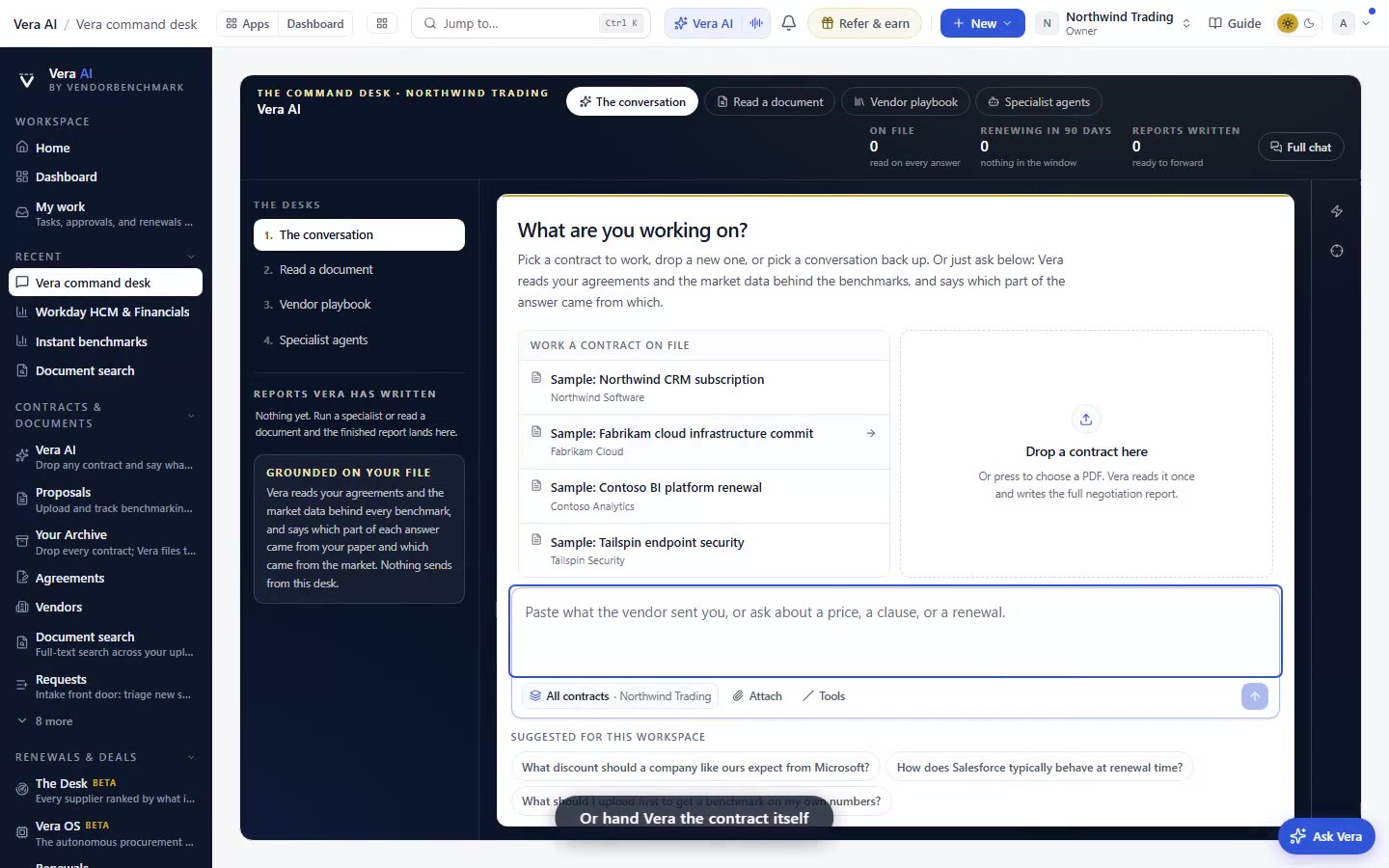
Drop five quotes at once, watch each station work, and read the paper beside the report
The analyst desk stopped being a one quote at a time tool. Drop several quotes together, set each one once, and let the queue run while you do something else.
Every procurement buyer knows the tax on quote season. Three renewals land the same week, a competitive bid arrives with two alternates, and each one needs the same treatment: read it, pull the settings, normalise the seats and the net a year, then benchmark it. The work is not hard. It is repetitive, and it is serial. You could only feed the Benchmark Agent one paper at a time, so a stack of five became five sittings, each with its own wait. This update removes the queue in your head and puts a real one on the desk. Drop several quotes together, set each one once, and let them run in order while you close the window and get on with the day. It follows the same direction as our work to make every benchmark open as a window and to make the report a workspace with the paper beside every answer.
The named problem: benchmarking is serial when your inbox is not
Quotes do not arrive one at a time. They arrive in waves, tied to a quarter end or a shared renewal date. The old flow made you serialise what your inbox had already bundled. You benchmarked quote one, waited, read the report, then started quote two from a cold desk. If each pass took a handful of minutes of attention plus a wait, five quotes cost you the better part of an afternoon of context switching, most of it spent watching a spinner or re entering the same settings. The batch desk is the fix. You stage the whole wave, describe each paper once, and hand the run order to the agent.
One fact sheet per paper, set once
When you drop a batch, the wizard opens a fact sheet for each paper rather than making you fill one long form. A fact sheet is a short list of setting rows. Each row carries the net a year and the seats, and the seats are in bold because they sharpen the report most. Get the seat count right and the benchmark tightens; leave it soft and the comparison widens. Where the read could not find a value, you get a caution stroke on that row so you know exactly what to confirm before the run, rather than discovering a blank inside the finished report. This is the same read that powers the two minute read on every upload, now surfaced per paper so nothing runs on a guess you did not see.
Two controls sit on each fact sheet. A switch decides whether the paper prints list prices, which matters when you want the report to show the walk from list to your quoted net rather than net alone. And situation presets let you set the posture in one press, so a competitive displacement and a flat renewal do not get benchmarked with the same assumptions. You are describing each paper on its own terms, then handing the whole set over at once.
The last step states the batch before it runs
Before anything runs, the final step states the batch plainly. It tells you how many papers are queued, about how many minutes the whole run should take, and how many of the month's runs it will consume so there is no surprise on your allowance. One press starts them one after another. The next paper begins the moment the one before it lands, so the queue keeps moving without you tending it. The window can be open or closed. Nothing waits on your attention once you have pressed run, which is the point of a batch: to convert a stack of quotes into unattended work.
The Runs room shows the work, not just a spinner
While the batch runs, the Runs room is honest about what each station is doing and what it has counted. For every paper you can see the searches spent and the sources found, the characters written, the findings fixed, and the time each step took. This is the same receipts and sources discipline we built when the Agent Desk grew up. You are not staring at a bar and hoping. You can watch a paper that found few sources and decide whether to trust its report as tightly as one that found many. When a run counts its own work in the open, you can audit the confidence of each result rather than accepting all five equally.
Press P and the source paper opens inside the report
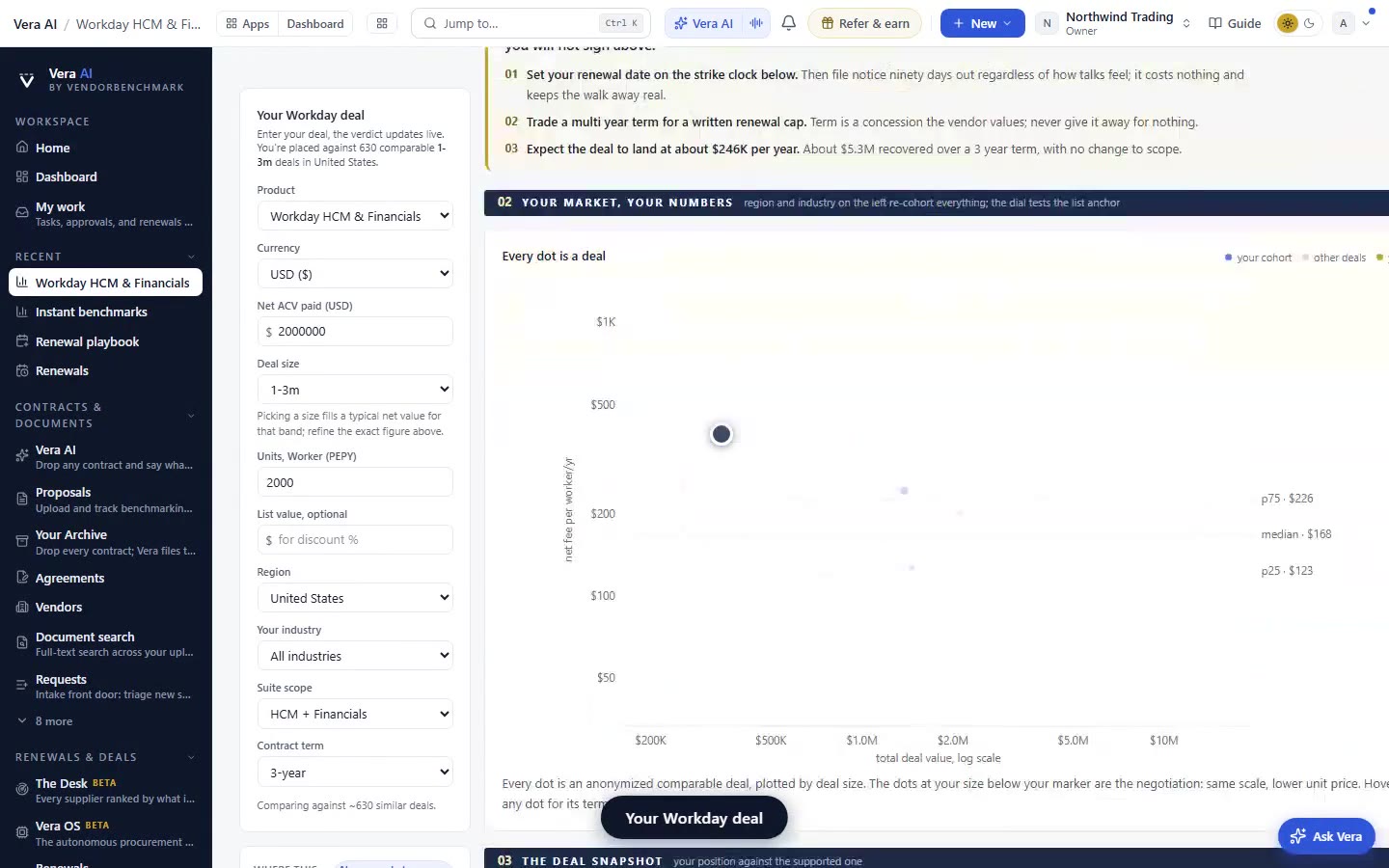
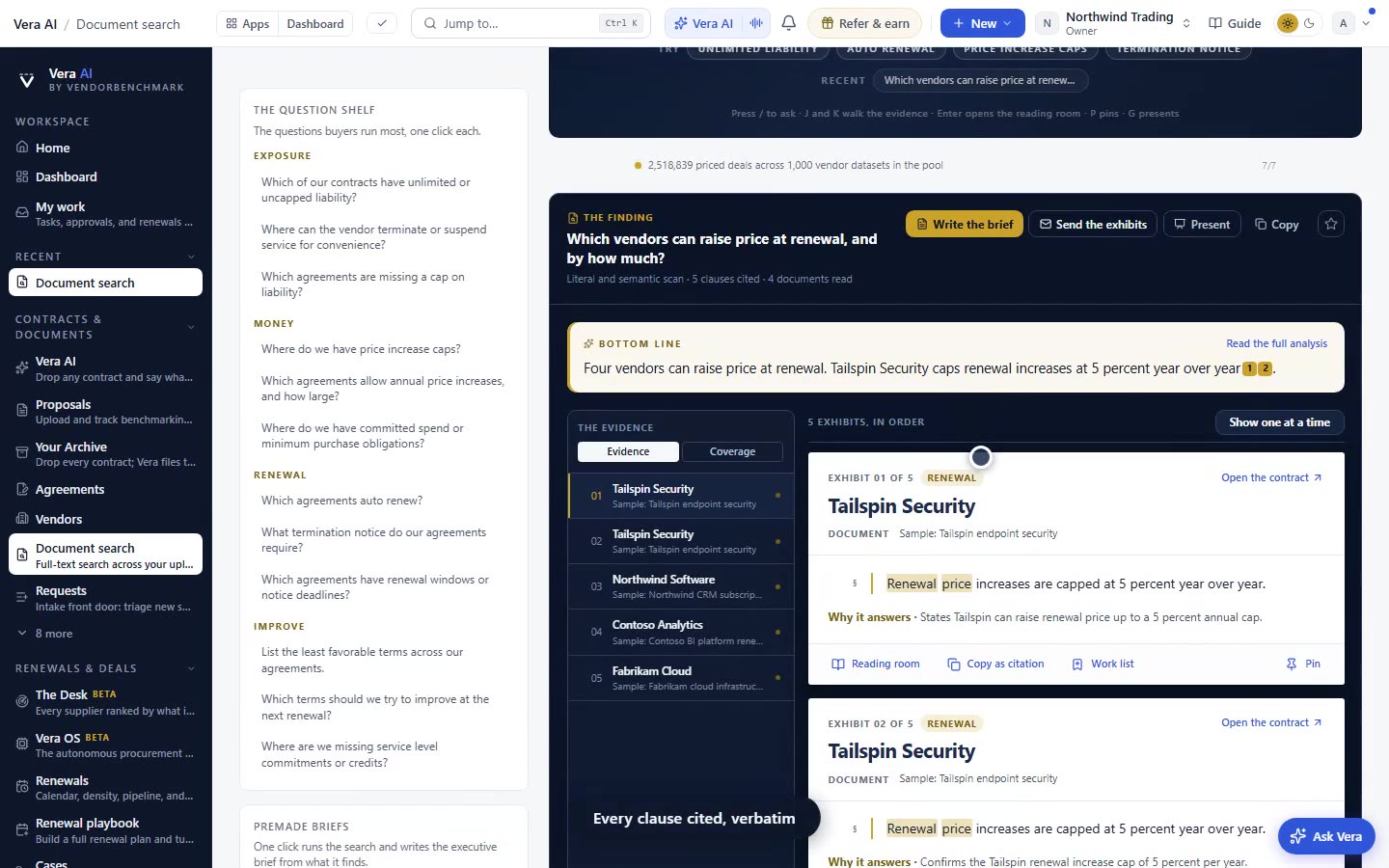
The output is not a floating number you have to take on faith. Press P on any finished report and the source paper opens inside the window with its lines beside the figures. Press a line to light it, and you read exactly what it prices. When you take a benchmark into a renewal conversation, the vendor will push back on the number, and the first question is always where it came from. Now the answer is one keypress away: the quoted line, lit, next to the benchmark it fed. That is the difference between a defensible position and an argument. It is the same reading posture that makes the renewal record a room you can work a case from inside.
What the batch desk does not do
Be clear eyed about the edges. The batch runs faster than serial work, but it still costs run time, and the last step tells you how many of the month's runs it will spend so you can pace a large wave rather than burn an allowance in one afternoon. The caution stroke flags where the read left a blank, but it cannot flag a value that was read confidently and wrong. If a quote states seats ambiguously, the fact sheet may fill a plausible number that still needs your eye, which is why the seats sit in bold and the source line is one keypress away. The situation presets set posture, not judgement; a displacement bid and a defensive renewal still need your read of the room. And the queue benchmarks what you drop. It does not chase the alternate quote that never arrived or reconcile a quote against the invoice you will later receive. Use the batch desk to clear the repetitive read at speed, then bring your own judgement to the reports it produces. You can start a batch from the benchmark tool and watch the first run count its own work.
Fredrik has spent more than twenty years in enterprise software, with time at Oracle, IBM, SAP, and Salesforce before moving to the buy side. He structured and priced the kind of large agreements most buyers only see once or twice in a career, which taught him where the leverage sits and how far a vendor will actually move. He started VendorBenchmark to hand that knowledge to every sourcing team.