The Agent Desk grows up: papers, sources, receipts and the call room
The desk of agents was useful but hard to trust. This release gives it sources, receipts, memory you can clear, and a leash that is now actually enforced.
Most buyers who ran a desk of agents hit the same wall. The agents were fast, but you could not see their working, you could not feed them the one PDF that mattered, and you had no idea what an agent labelled a Watch was quietly allowed to do while you were in a meeting. An agent that draft when it should only observe is not a convenience, it is a liability. This release closes that gap. Twenty improvements landed on the desk of agents in a single pass, and the theme running through all of them is the same. Show the sources, keep the receipts, and make the leash mean something.
Papers and sources ride with the question
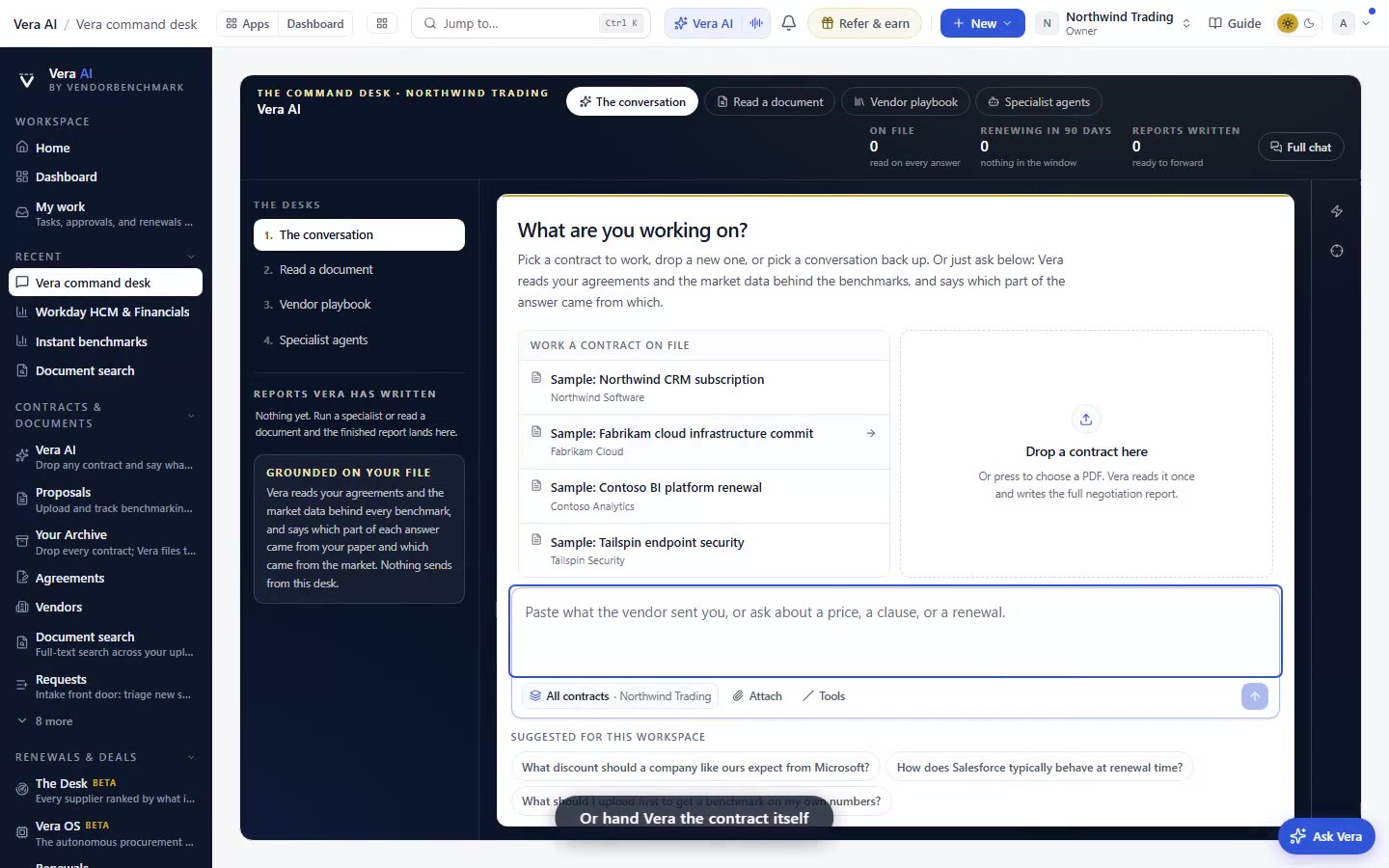
The first change is the one you will use hourly. You can now drop a PDF straight onto an agent conversation and it rides with every question you ask after that. No separate upload screen, no re attaching, no wondering whether the agent actually read the thing. If you have watched how every upload gets the two minute read, this is the same instinct applied to an agent thread. Drop the renewal quote, then ask the agent to compare it against the standing brief.
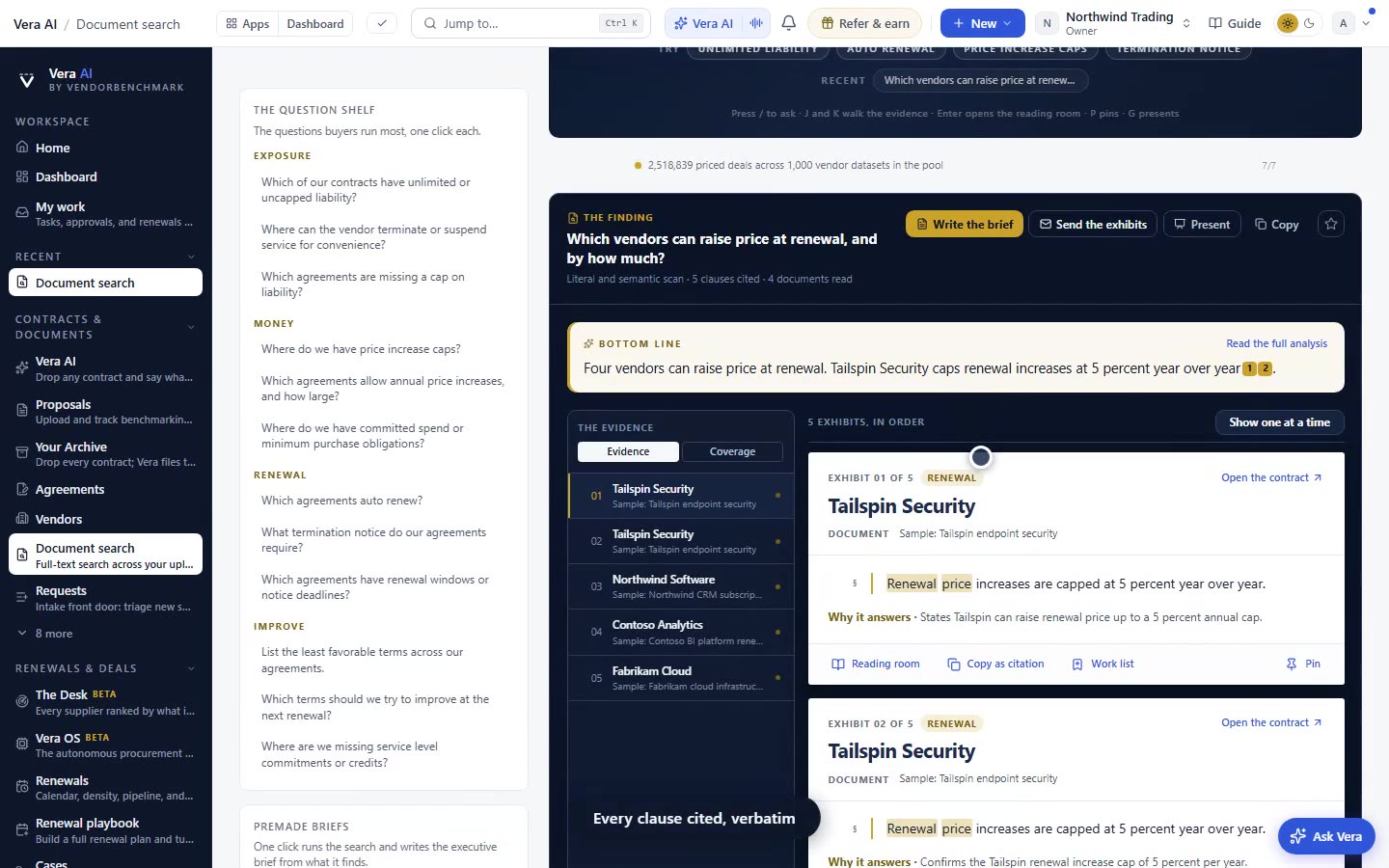
Answers now carry the same citation chips you already trust from the main Vera conversation, plus copy and feedback controls. That matters more than it sounds. A number without a source is an opinion. A number with a chip that opens the benchmark or the clause behind it is evidence you can take into a room. Papers themselves now render as styled pages rather than embedded files, so the source is legible instead of buried.
Receipts, memory and a Clear control
Every run of an agent's chain now lands in its thread. The weekly reads, the upload triggers, the scheduled checks, all of it is on the record instead of happening in the dark. An agent that worked while you were away shows a dot until you look, so you are not scrolling to find what changed. This is the same principle behind the idea that every screen you work in now keeps your work, extended to autonomous runs.
When you set an agent to work, it now asks whether there is anything specific this time. That one prompt stops the most common failure mode, which is an agent doing its default job when you actually needed something narrower. Stood down agents keep a read only door and a Rehire button, so the history survives even when the agent does not.
The gear on each agent now shows this month's counted receipts and what the agent remembers, with a Clear control. You can see the memory, and you can wipe it. For a buyer, being able to clear an agent's memory before a fresh negotiation cycle is not a nicety. It stops stale assumptions from last quarter leaking into this quarter's position.
The call room, from any agent
The phone button now takes any agent into the call room. Its role and standing brief are written onto the call sheet for you to edit before you dial, so the analyst on the line already knows the vendor, the position and what you are trying to win. When you hang up, the memo is written for you. We covered the mechanics of this in detail in the call room post, and this release simply makes it reachable from every agent instead of one.
Search now reads the conversations themselves, not just titles and metadata. If an agent flagged a threshold three weeks ago, you can find the sentence again without remembering which thread it was in. For a desk running thirteen inbox agents and six specialist agents, that is the difference between institutional memory and a pile of forgotten chats.
The leash became enforcement
This is the change that should matter most to anyone accountable for what these agents do. A Watch agent no longer has drafting tools at all. Not disabled, not discouraged, absent. If an agent is meant to observe, it now physically cannot draft. Agent behaviour is covered by a pinned prompt contract and a live evaluation, which means the constraints are stated up front and checked while the agent runs, not audited after the fact.
For a buyer, this is the difference between a demo and a control you can defend to your CFO. The staffing model behind the desk was always about matching an agent to a role. Now the role has teeth. If you want an agent watching a vendor's price list without ever touching a draft, you can have exactly that, and prove it.
Honest limits
Be clear eyed about what this does not do. The PDF drop reads the document you give it, and a scanned image or a badly built PDF will still degrade the read. Citation chips point to the source behind a figure, but they do not verify that you asked the right question, so a precise answer to the wrong prompt is still the wrong answer. The memory Clear control wipes what an agent remembers, which is a feature until you clear it by mistake, so treat it deliberately.
The call room writes a memo from the call, but it is a starting draft, not a signed record. Read it before it goes anywhere. And the enforcement on a Watch agent stops drafting tools, it does not stop a human from copying an observation into a draft themselves. The leash constrains the agent, not the buyer. Used well, none of these limits will bite. They are worth stating so you configure the desk with your eyes open rather than trusting it blind. If you want a companion for the harder documents, pair this with a contract decode before you set an agent loose on the terms.
Want to be updated when major licensing and pricing changes land? One analyst brief a week: the price rises, metric changes and audit campaigns that move software costs. Work email only.
Morten brings two decades of enterprise and software procurement, with stints across Oracle, IBM, SAP, and Salesforce shaping how he reads a deal. He has led sourcing through hundreds of renewals, from mid market order forms to nine figure global agreements, and learned that the buyers who win are the ones who walk in knowing the market. He built VendorBenchmark to make that pattern recognition repeatable.