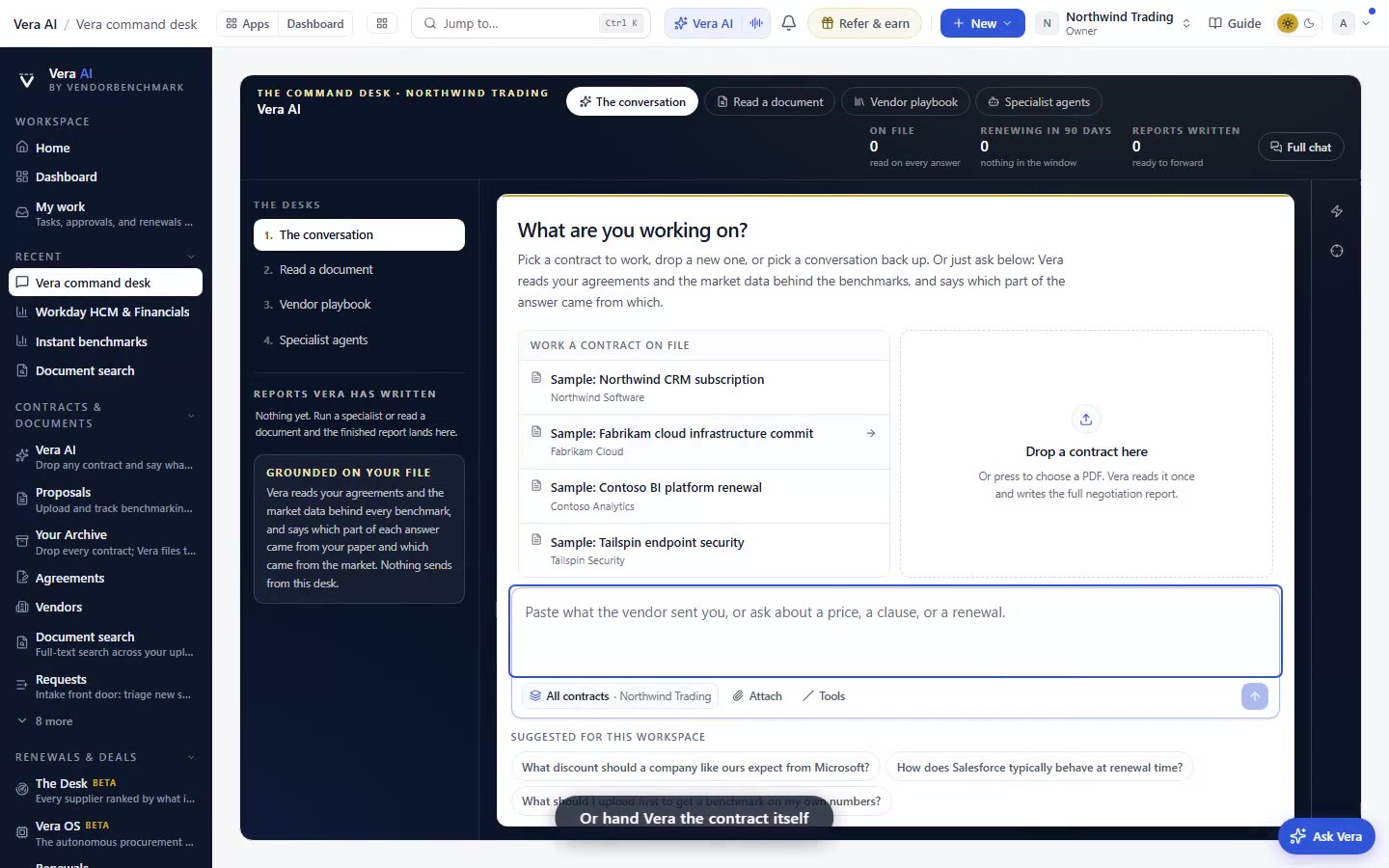
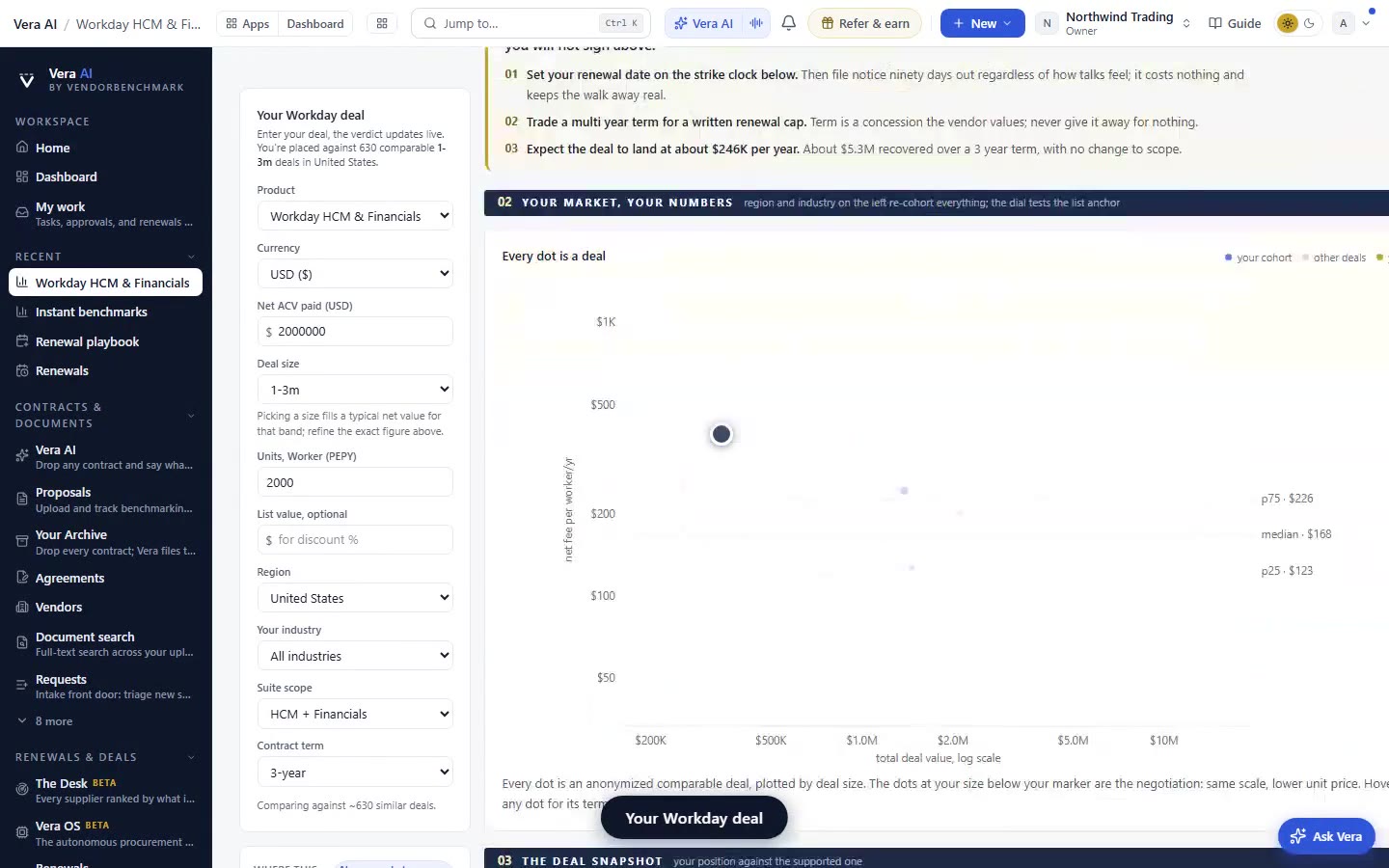
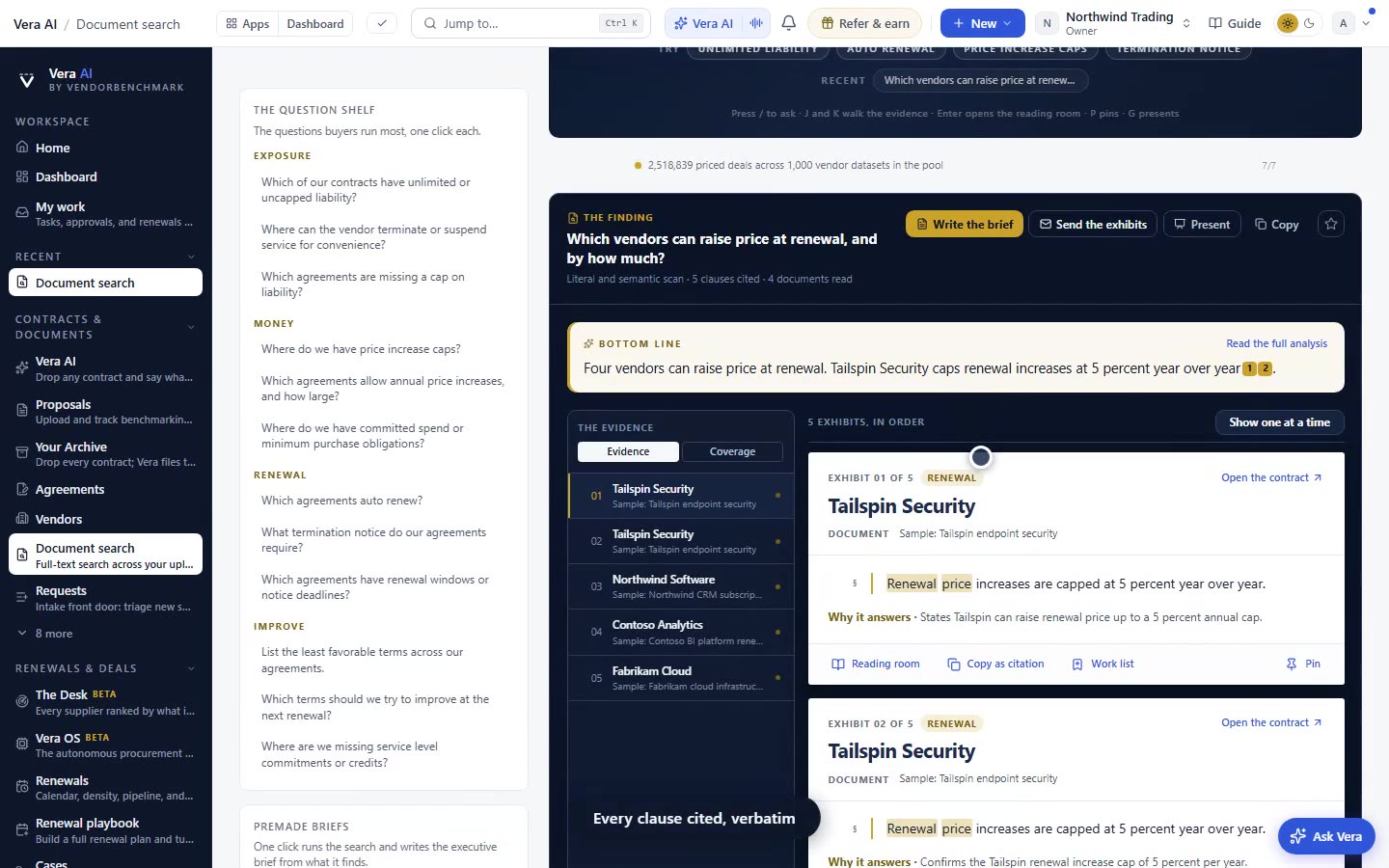
Sourcing closes the loop, in windows all the way down
Sourcing now wears the same glass as the rest of the desk, and the work after the award finally has somewhere to live. Here is what changes for a buyer.
There is a familiar gap in most sourcing tools. The event runs cleanly enough, the award lands, and then the record goes quiet. The supplier's actual performance over the next four quarters lives in someone's inbox, the demo notes live in a slide nobody reopens, and the funnel that told you who you invited and who bothered to respond is a spreadsheet you rebuild by hand the next time. This update is about that gap. The project record and the deal desk now open as Fluent windows with the desk rail as their menu, so every sourcing surface matches the rest of the platform, and the loop keeps running after the award instead of stopping at it.
The whole floor wears the same glass
The visible change first. The project record and the deal desk are now windows, not detached pages, and they share the desk rail as their menu. If you have followed the shift we described in the app window, simplified, this is the same idea reaching sourcing. One titlebar, the whole page, and the same navigation you already use everywhere else. The point is not decoration. When the sourcing surface behaves like the contract surface and the negotiation surface, you stop relearning a separate interface for a separate part of the job, and the record you open mid-event looks like the record you closed last month.
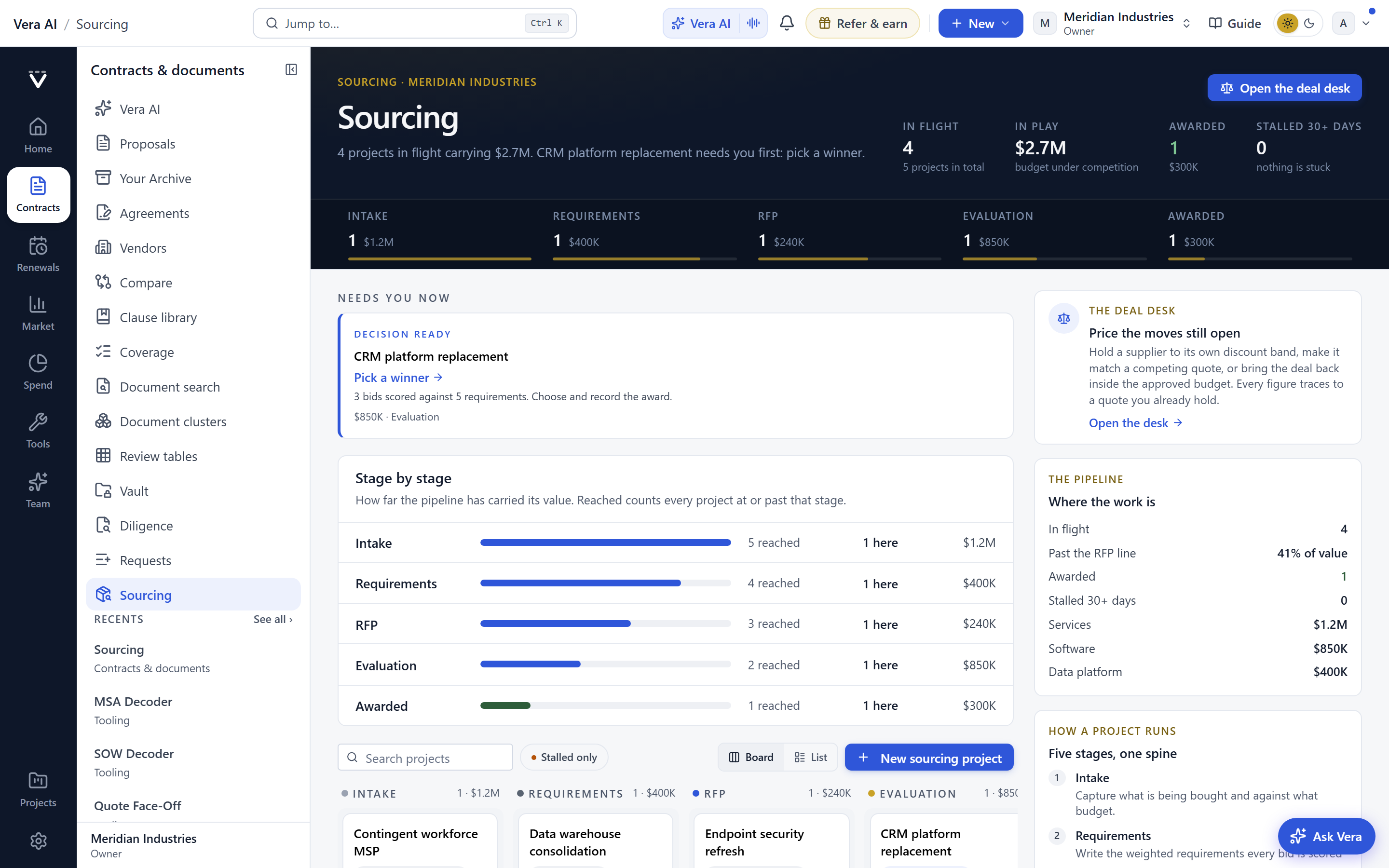
The loop that runs after the award
Most of the value here sits past the award, where sourcing tools usually go dark. Three things now persist. First, you score each supplier's quarter on their master record, and the next event's register shows that score as prior performance. That means a supplier who underdelivered last year arrives at the next bidding table carrying the evidence, not a fresh clean slate. Second, you schedule demos and bake-offs inside the record and capture what the room actually saw, so the assessment survives the meeting. Third, you read the funnel honestly on the floor, invited to responded to won, with participation per supplier and the diversity and sustainability rollup sitting beside it rather than in a separate reporting exercise.
This is the sourcing equivalent of what we argued in post-mortems that compound. The record of how a supplier performed is only leverage if it reaches the next negotiation intact. Scoring on the master record is what carries it forward. And because the capture happens in the room, it echoes the principle from the notes are written before you ask: the assessment exists whether or not someone remembers to write it up later.
A best and final that nobody wins by timing
The best and final round now runs as a price-improvement window with clear rules. Every bidder sees the anonymous leading total. Each bidder may only move down. And a filing in the last 15 minutes extends the clock, so a supplier cannot snipe the close by holding their move until the final seconds. The extension rule is the important part. Without it, a best and final rewards timing tactics as much as price, and the buyer loses the honest comparison the round was meant to produce. With it, the incentive is to keep improving until nobody will, which is the whole point of the exercise.
This pairs naturally with what you already know about when discounts actually move. If you are running the window against a supplier's quarter end, the reading in vendor fiscal calendars tells you why the room is more willing to move down on certain dates than others. The window gives you the mechanism, the calendar tells you when to open it.
Reaching the ERP seam and serving the document verbatim
Two integration details close the operational gaps. Owners can register signed webhooks so that awards and bids reach the ERP seam, which means the moment you award is the moment your finance system can act on it, without a manual re-key or a nightly export that lands stale. And a ready-made RFP, RFI or RFQ uploads and serves to bidders verbatim, so the document your legal and category teams agreed on is the exact document every supplier sees, character for character. No re-typing into a template, no drift between what you approved and what went out. If your uploads already get the treatment described in every upload gets the two minute read, this is the serving side of the same discipline.
Honest limits
Be clear about what this does not do. Scoring a supplier's quarter is only as good as the discipline of actually scoring it. The system carries the score forward, but it cannot invent an assessment nobody entered, and a blank prior-performance field at the next event is a habit problem, not a product one. The price-improvement window governs the mechanics of a best and final, but it does not decide whether running one is the right move for a given category, and forcing an aggressive round on a thin supplier base can shrink participation rather than sharpen price. The diversity and sustainability rollup reflects the attributes on each supplier record, so a stale or incomplete record produces a stale rollup. The signed webhooks reach the ERP seam, but the mapping on the ERP side is yours to configure and maintain, and a schema change on that end will still break the handoff until someone updates it. None of this replaces the judgement in the room. It removes the reconstruction work so that judgement has clean inputs, which is the most a sourcing surface should claim to do. For the full picture of how the floor fits the rest of the desk, the sourcing overview lays it out.
Want to be updated when major licensing and pricing changes land? One analyst brief a week: the price rises, metric changes and audit campaigns that move software costs. Work email only.
Morten brings two decades of enterprise and software procurement, with stints across Oracle, IBM, SAP, and Salesforce shaping how he reads a deal. He has led sourcing through hundreds of renewals, from mid market order forms to nine figure global agreements, and learned that the buyers who win are the ones who walk in knowing the market. He built VendorBenchmark to make that pattern recognition repeatable.