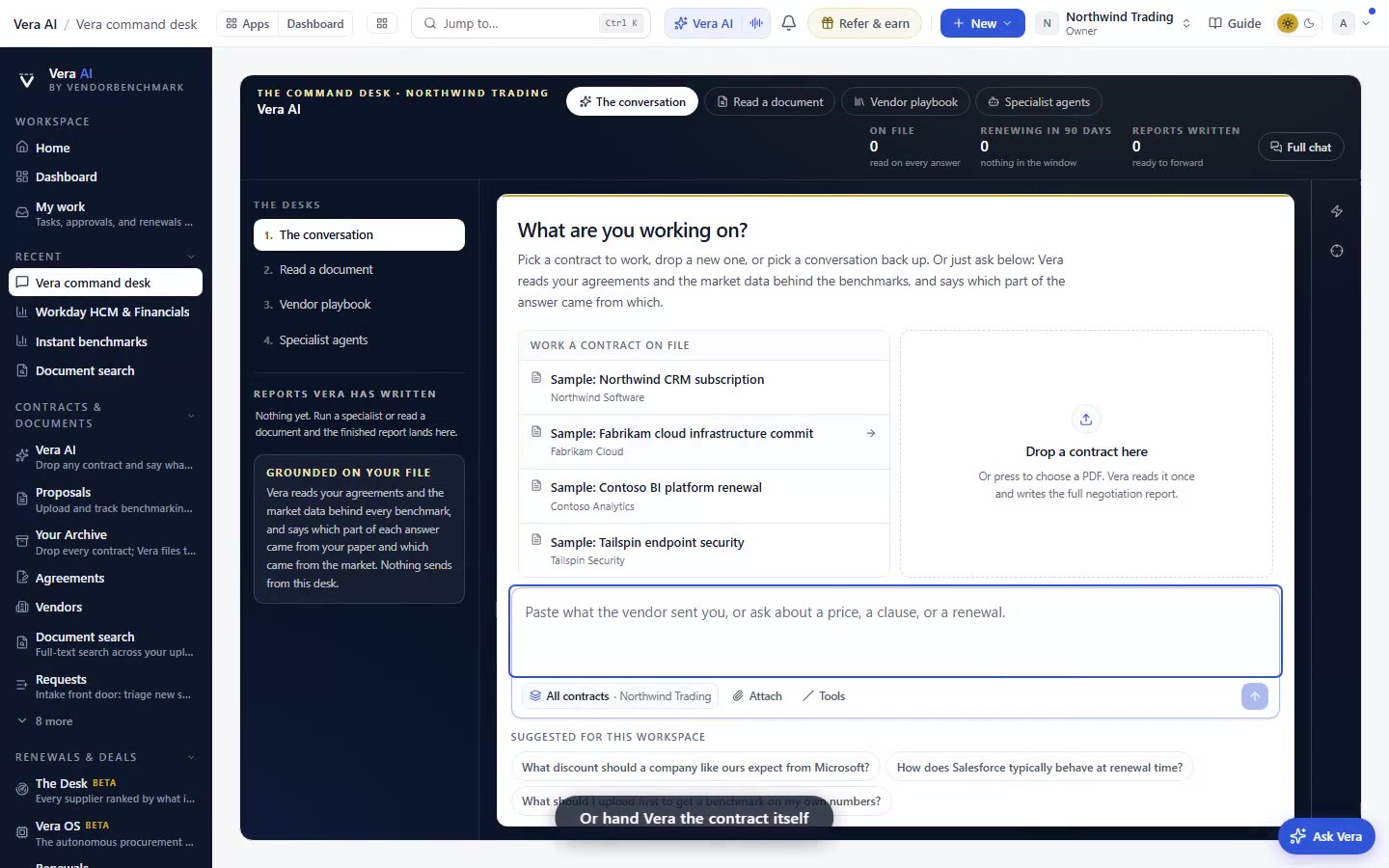
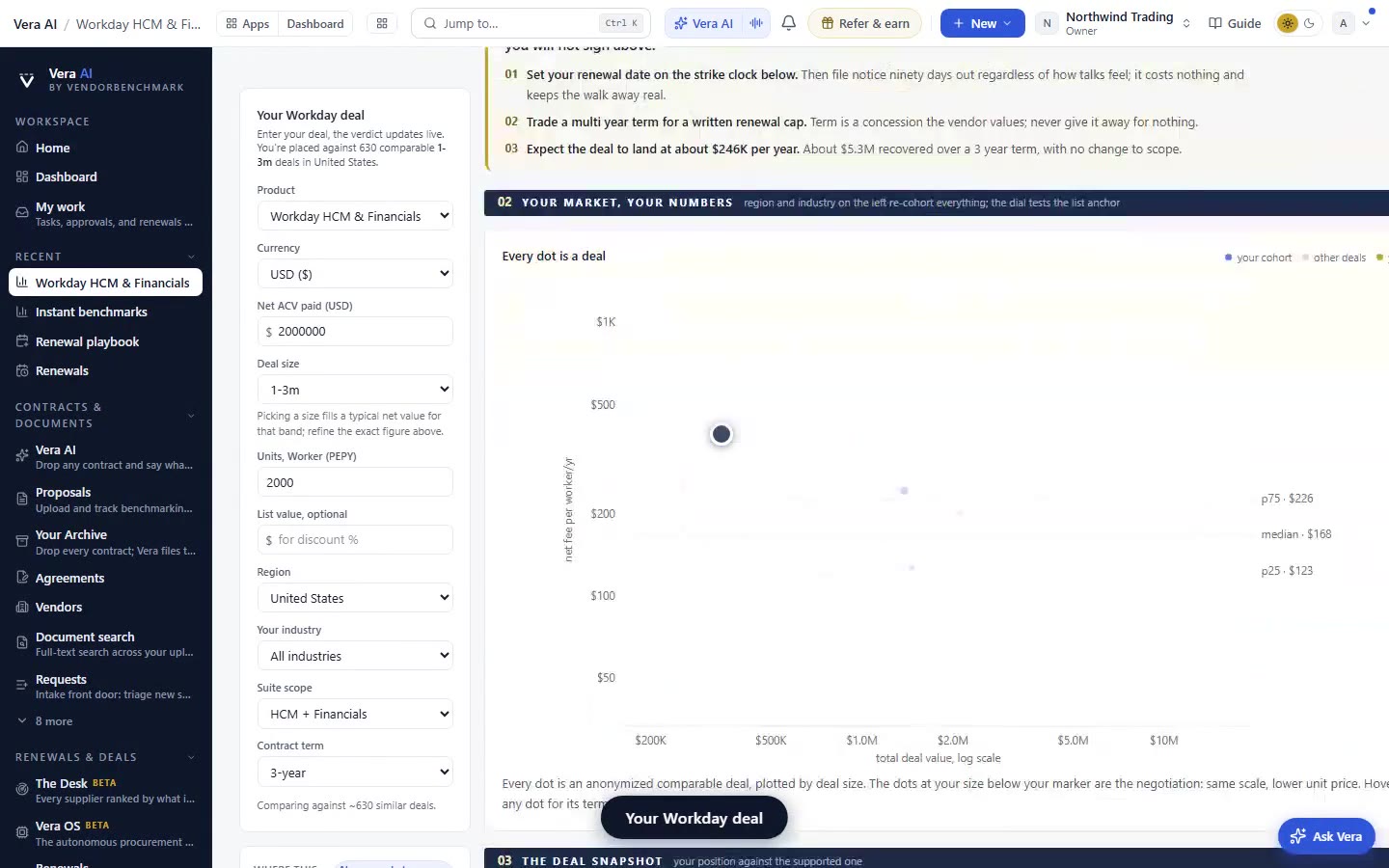
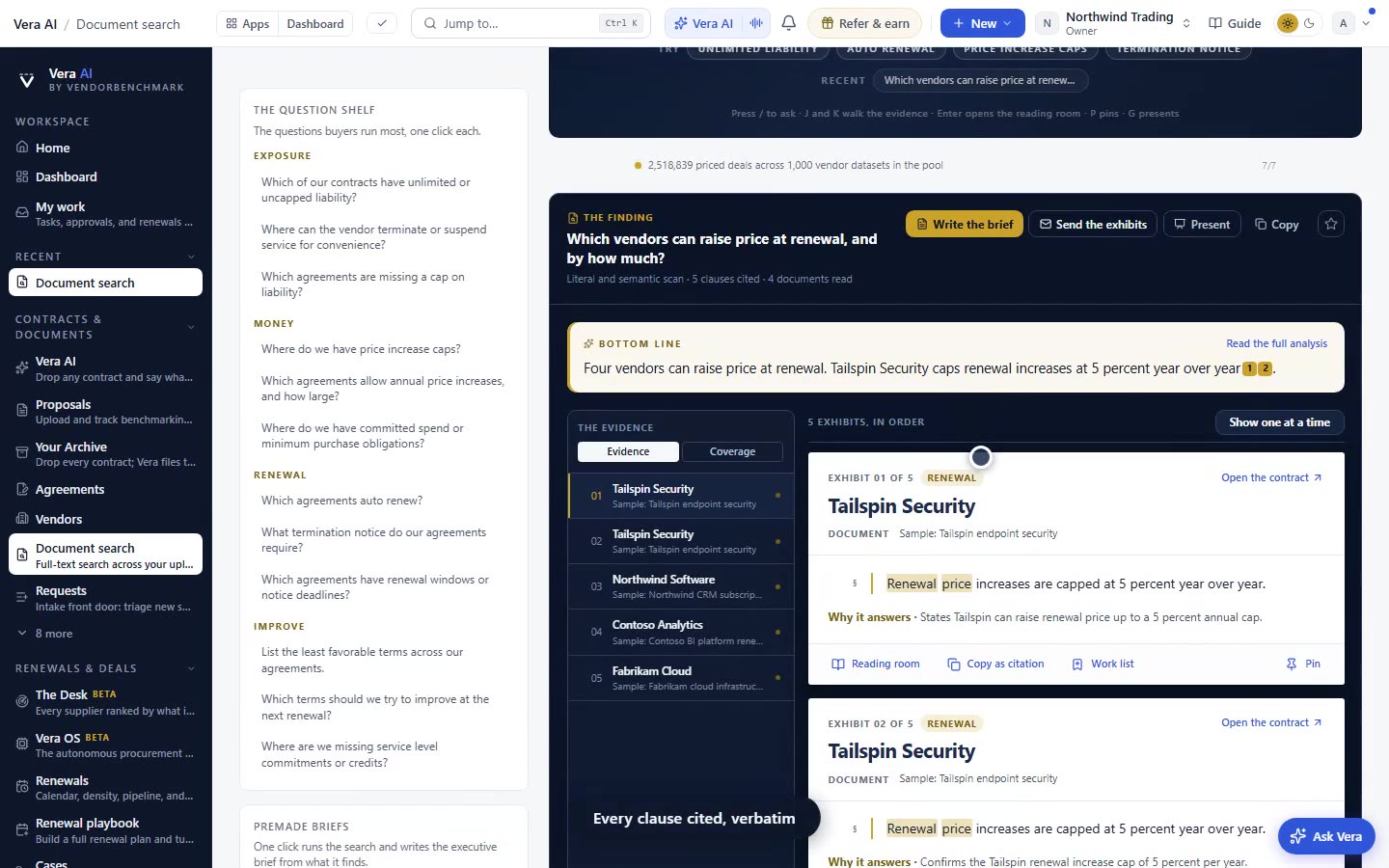
The tools are now sorted by what you are holding
We stopped organising the tools around our product and started organising them around your desk. Nothing moved, nothing was renamed, and the Verdict Bar now tells you what comes back before you upload.
There is a small tax you pay every time you open a tool menu that was built by the vendor for the vendor. You arrive with a document in hand, a renewal quote, a draft MSA, two competing proposals, and the first thing the menu asks of you is not what do you need but which part of our product do you already understand. Two dozen tools used to sit under headings named after the internals: the benchmark engine here, the clause work there, the negotiation module somewhere below. Before the product told you anything, you had to translate your situation into our architecture. That translation step is invisible until you count how often you get it wrong, open the wrong tool, back out, and try again.
The named problem: you should not have to know our map
Call it the routing tax. A procurement lead holding a renewal letter knows exactly what they want to know, is this discount defensible and where does the deal rank, but the old menu made them decide first whether that was a benchmarking task, a contract task, or a negotiation task. Those are our categories, not theirs. The result was predictable. New users clicked around for a few minutes before landing anywhere useful, and experienced users built muscle memory to skip past the headings entirely. Neither is a good outcome. The menu was doing filing when it should have been doing triage.
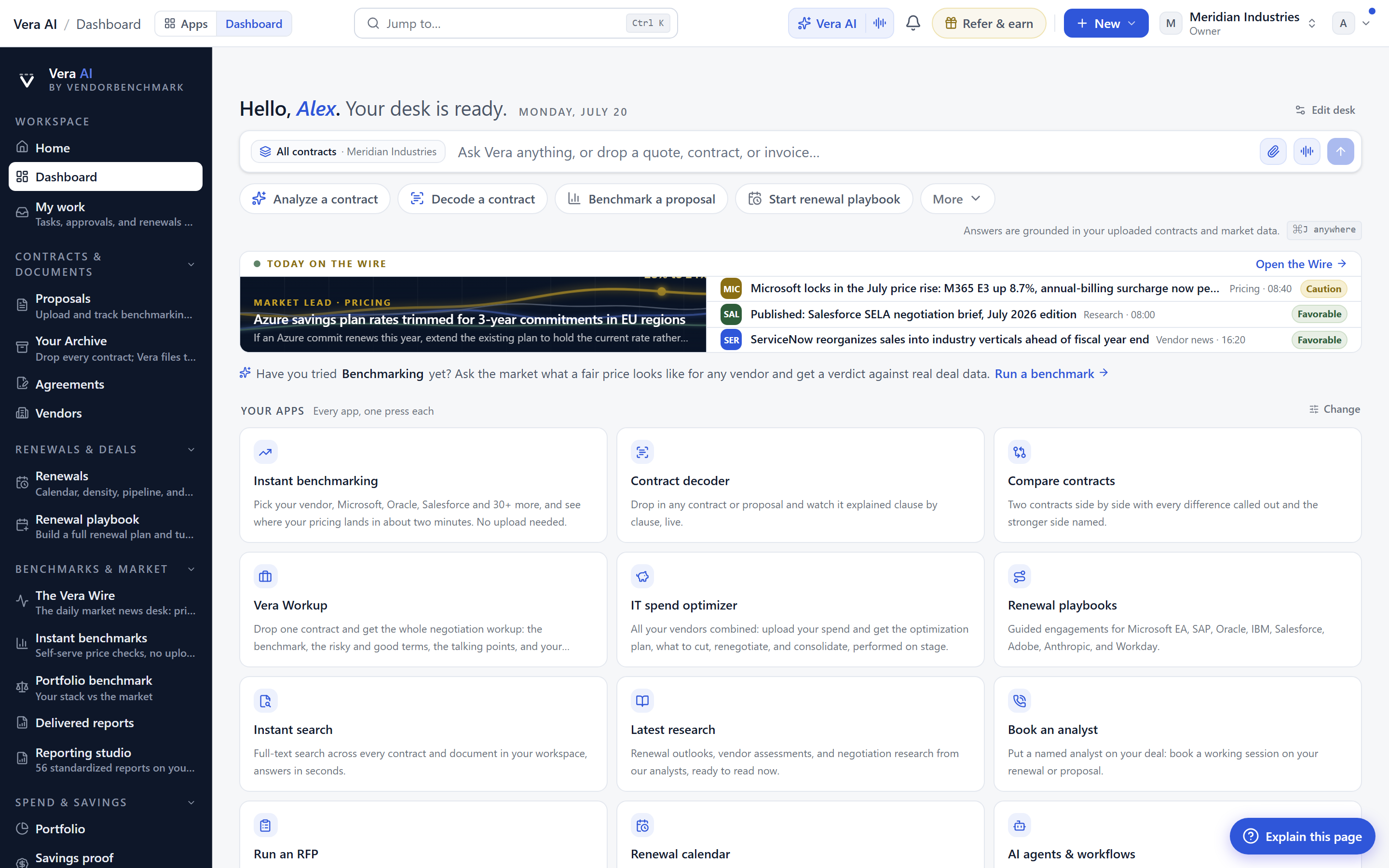
So we changed what the menu opens with. It now opens with Not sure which tool, which holds the Verdict Bar on its own at the top. You drop any document, a quote, a proposal, an order form, a redline, and it works out what it is and which engine should judge it. You do not classify the document. It classifies itself and routes to the right reading. If you already know what you are holding, the tools underneath are grouped by your situation rather than ours.
Grouped by your situation, not our architecture
Under the Verdict Bar, the tools are grouped by the five states a buyer is actually in. You know what it is. You are comparing two things. You are planning the negotiation. You are lowering the run rate. You are sizing a commitment. Each of those is a sentence you would say out loud at your own desk, and each maps to the tools you would reach for in that moment. Comparing two proposals sends you toward the compare and quote face-off work. Planning the negotiation sends you toward the war room and the playbooks. Sizing a commitment is where the term value and the estate view live.
The important thing here is what did not happen. Nothing was renamed, moved, or merged. Every tool sits at the same address it always did, every deep link still resolves, and every habit you built still works. If you had a bookmark straight into the clause library or the invoice reconciliation, it is untouched. This is a change to the front door and the signage, not to the rooms. We treated it the way we treated the titlebar simplification: reduce what you have to decide before the product starts working, without breaking anything underneath.
The Verdict Bar now tells you the shape of the answer first
The second half of this update is the Verdict Bar itself. Before, it was an input, a place to drop something and wait. Now it states what comes back before you upload anything. It names the four things a verdict contains: your discount, what comparable buyers get, where the deal ranks, and what it is worth over the term. You know the shape of the answer before you commit the document, which matters when you are deciding whether to run something through at all. This is the same reading model we described when every vendor benchmark started opening as the verdict reading. The bar is now consistent with it from the first click.
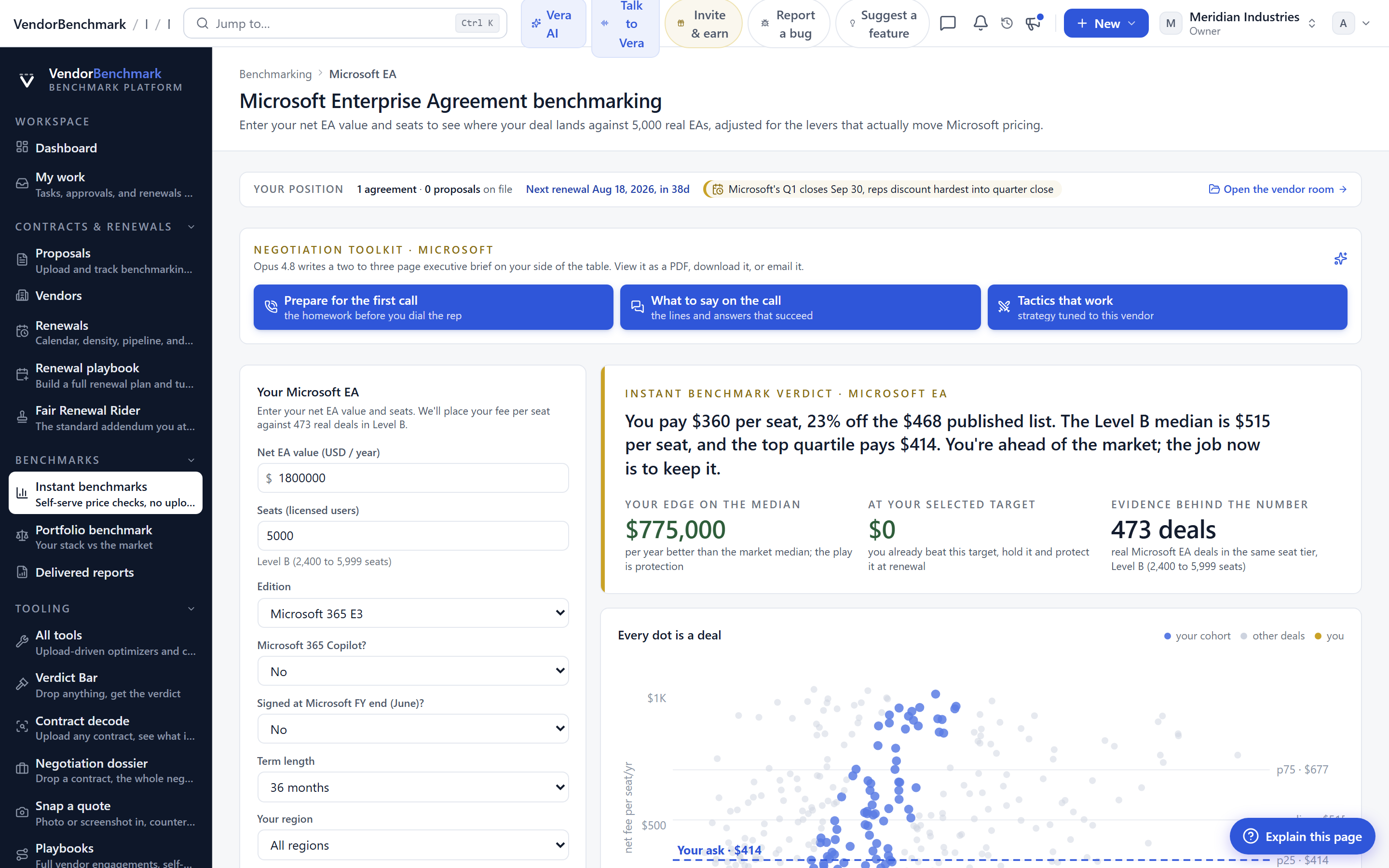
That comparison to what comparable buyers get is drawn from the peer curve, not from a list price the vendor invented. When you drop a quote into the bar, the routing decides which of the specialist engines reads it, and the reading lands with cited figures rather than a headline number you have to trust. You can see the full mechanism on the verdict page.
What this changes for a buyer, in order
Honest limits
Three things this update does not do. First, the automatic classification is very good but not infallible. If you drop something unusual, a hybrid order form stapled to a bespoke schedule, it may route to the closest engine rather than the perfect one. When that happens you still have the situation groupings underneath to pick the tool by hand, and every tool remains one click away. The routing is a helpful default, not a lock.
Second, the verdict is only as good as the comparable set behind it. Where we have deep coverage of a category, the ranking and the peer figure are tight. In thinner categories the reading is still directionally useful but the confidence band is wider, and the product tells you so rather than pretending otherwise. If you are working a category that reprices under you, treat the number as a snapshot with a date on it.
Third, this is a navigation and framing change. It makes the right tool easier to reach and the answer easier to anticipate. It does not itself negotiate for you, sign anything, or replace the judgement you bring to a term you know matters more than price. The uplift caps and floors still need a human deciding what to trade. What the update removes is the friction between holding a document and getting a defensible reading of it. That friction was small on any single day and large across a year, which is exactly the kind of tax worth cutting.
Want to be updated when major licensing and pricing changes land? One analyst brief a week: the price rises, metric changes and audit campaigns that move software costs. Work email only.
Morten brings two decades of enterprise and software procurement, with stints across Oracle, IBM, SAP, and Salesforce shaping how he reads a deal. He has led sourcing through hundreds of renewals, from mid market order forms to nine figure global agreements, and learned that the buyers who win are the ones who walk in knowing the market. He built VendorBenchmark to make that pattern recognition repeatable.