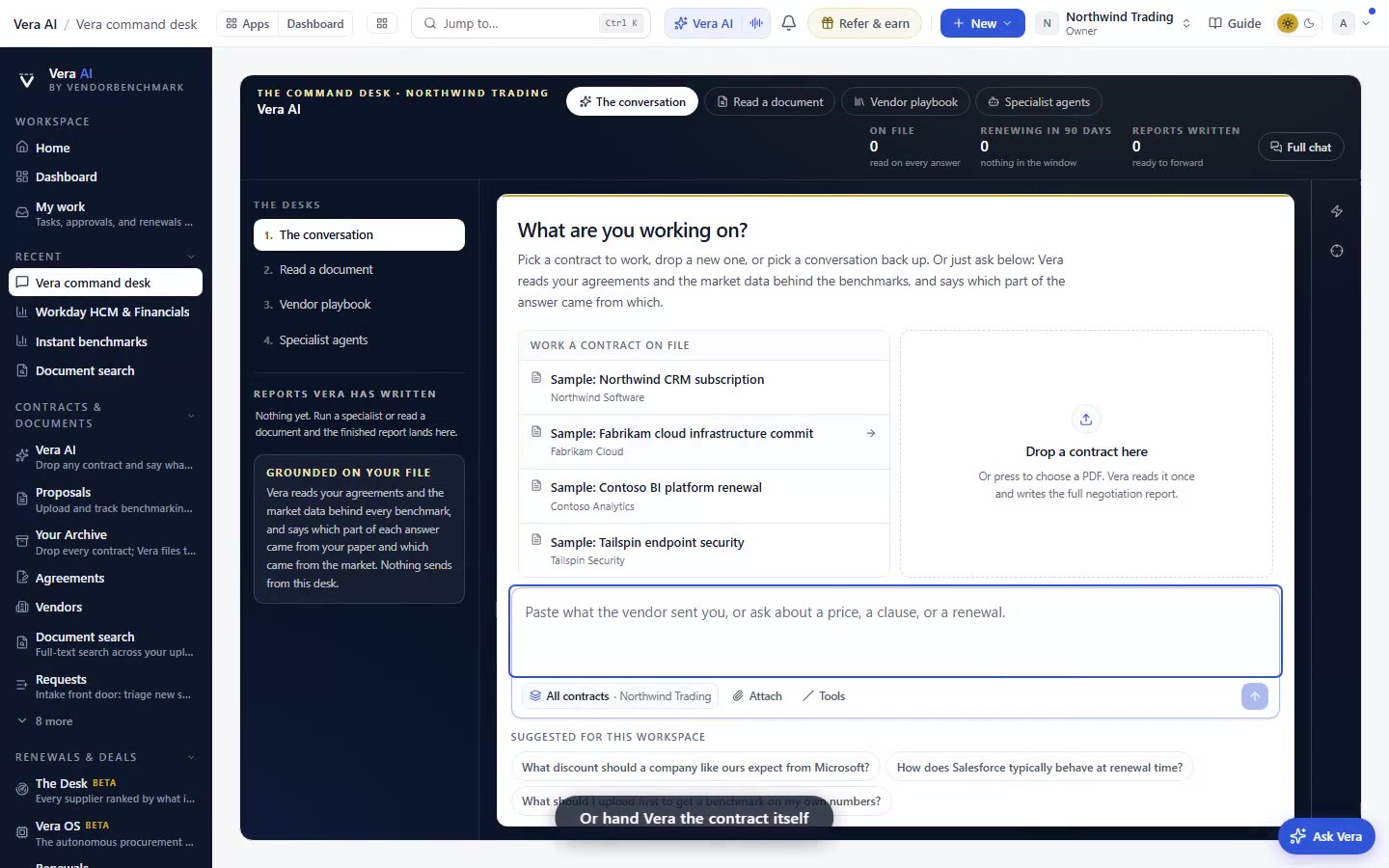
Vera and the bench listen while they speak, and you choose the language
Every spoken line in the war room now runs on a duplex model. Here is what changes for a buyer at the table, how it fits your prep, and where it still stops short.
PRODUCT UPDATE · FROM THE ANALYST DESK. There is a moment in most vendor calls that costs buyers more than any single line item. The vendor makes a claim, and the room goes quiet while your side works out whether the claim is true. Half a second becomes two seconds, and two seconds reads as concession. If you have used our live call copilot, you know the fix was already close. Today it gets closer. Every spoken line, the call room, the specialists, and the seat you send into a meeting now runs on a model that listens and speaks at the same time.
The named problem: the pause that reads as weakness
Call it the answer gap. The old pattern with any spoken assistant was strict turn taking. You spoke, it finished hearing you, then it composed, then it began. Each handoff added latency, and latency at the table is not neutral. A buyer who hesitates on a renewal uplift looks like a buyer who has not done the work, even when the work is done. The reverse problem was just as costly. When you needed to cut in because the vendor was building a false premise, a turn taking system kept talking over your correction until its sentence ended.
So the goal was never a smoother voice. It was closing the gap in both directions, so your seat starts sooner and stops the instant you take the floor back. That is a duplex model, one that listens while it speaks.
What the duplex model actually does
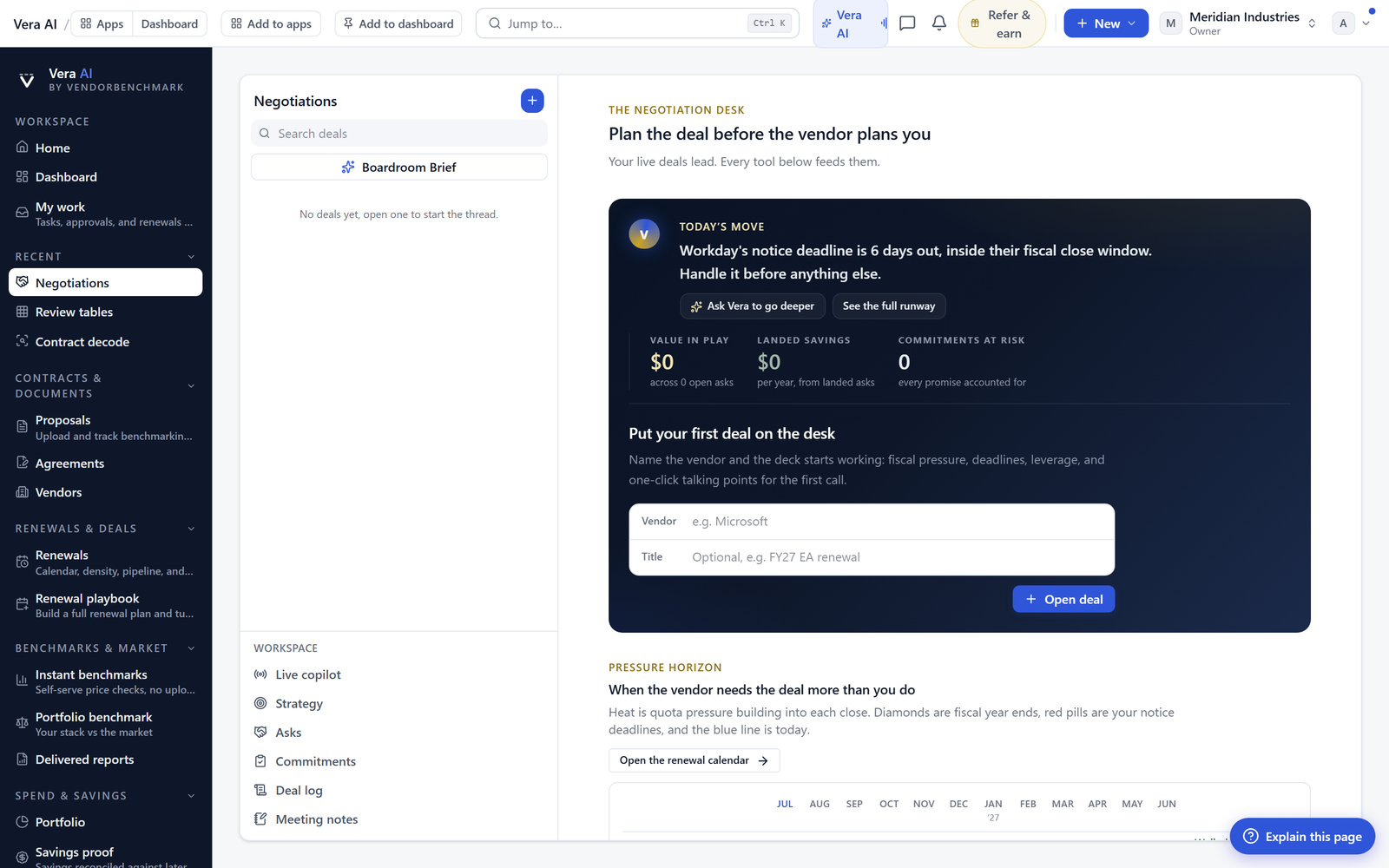
Four behaviours change, and each maps to a specific failure you have felt on a call. First, the first word lands faster. There is still a beat, but it is short enough to read as composed rather than caught out. Second, cutting in stops the seat at once. If you take the floor, it yields immediately, where an mm hm or a soft acknowledgement does not, so you can steer without a talkover collision. That distinction matters. A backchannel keeps it going, a real interruption halts it.
Third, it manages its own thinking out loud. When it needs a moment with your contract, it says so, and it keeps talking until the answer lands rather than dropping into dead air. Silence at the table is the tell you want to avoid, and this removes it. Fourth, a figure from your records is read back exactly. If your last invoice shows a specific per seat rate, the seat states that rate, not a rounded paraphrase. Accuracy on your own numbers is the whole point of putting a voice in the room.
A panel that sounds like a panel
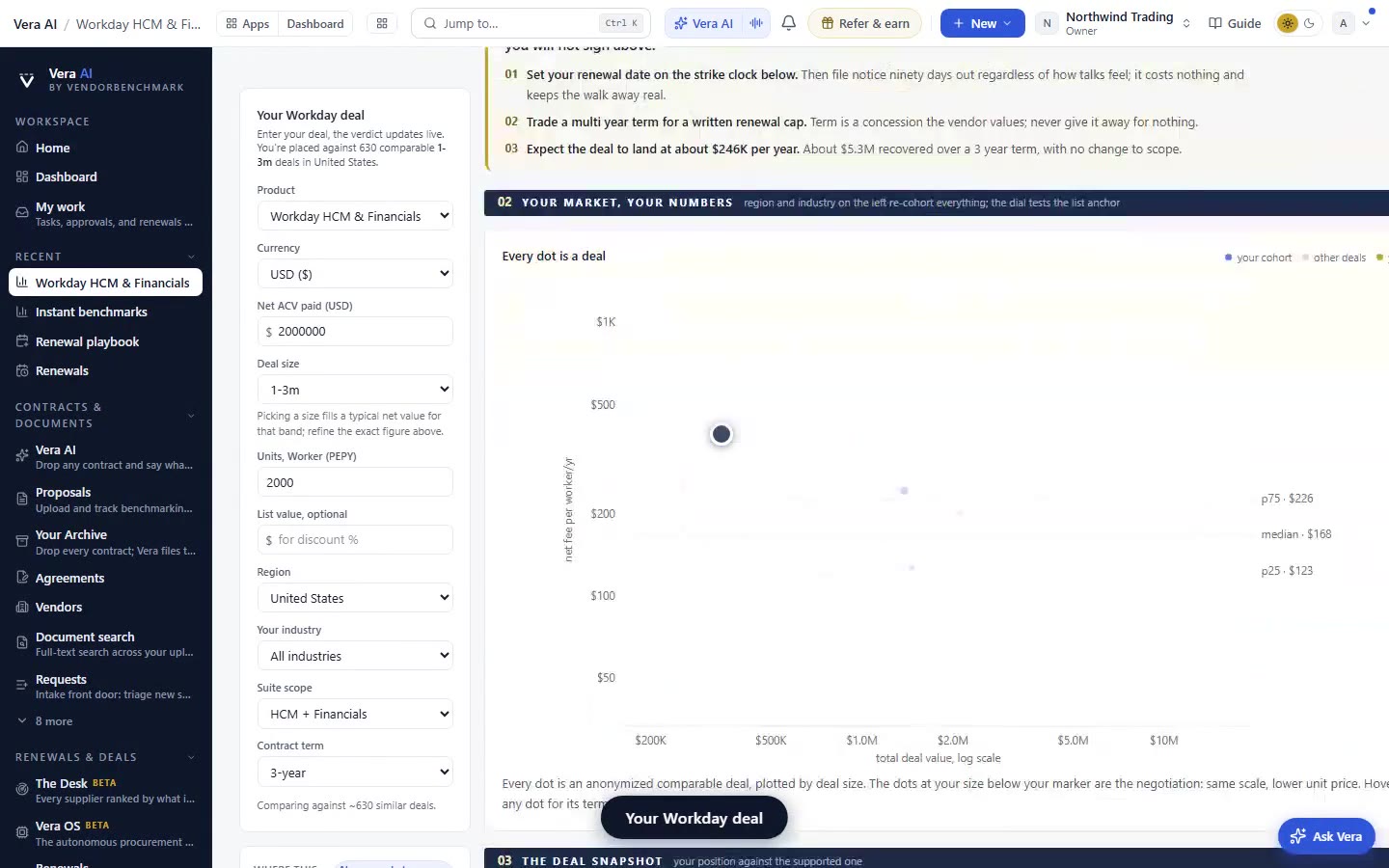
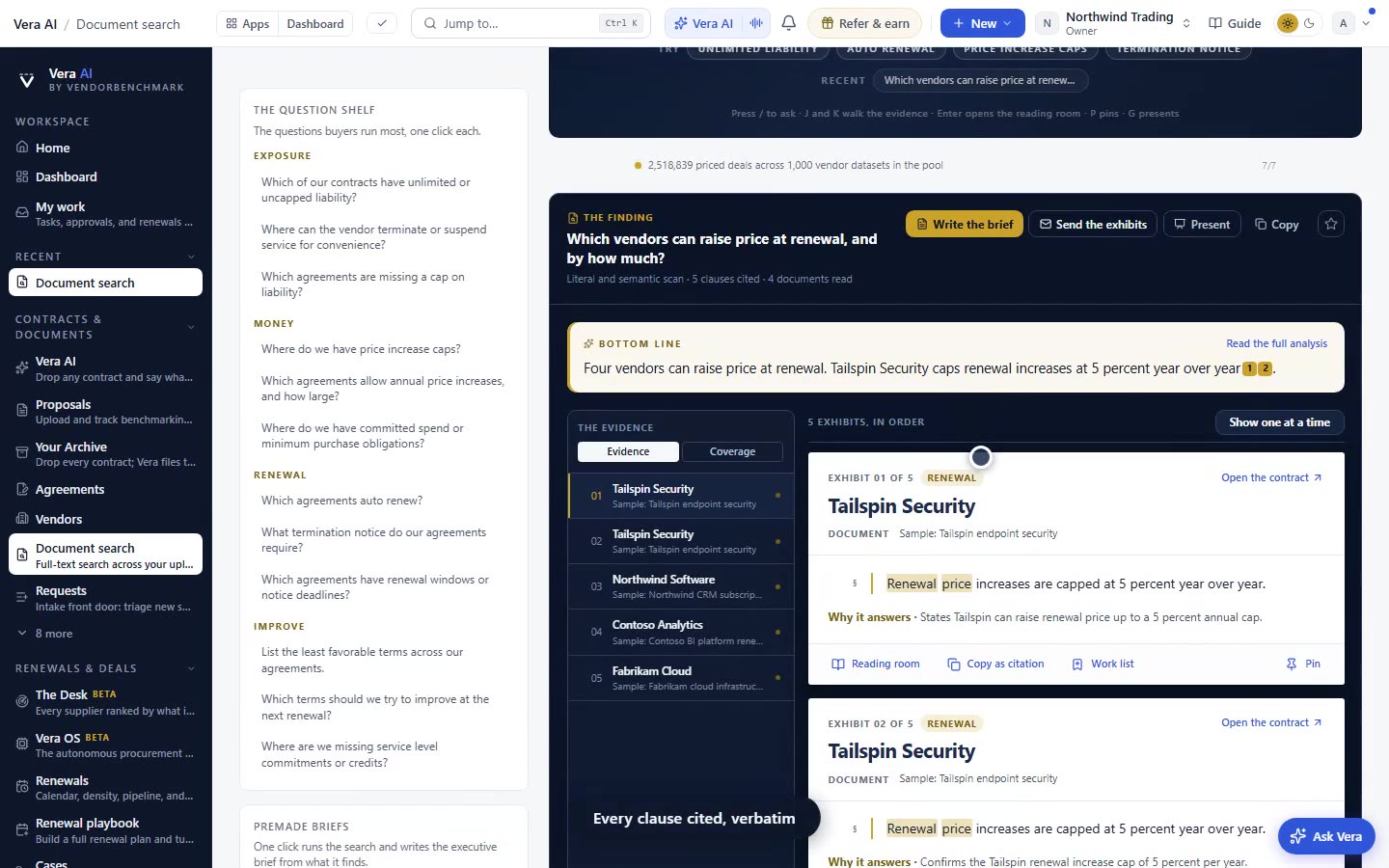
The bench of specialists each has a voice of its own now. Previously a multi specialist exchange could blur, because everyone sounded the same and you lost track of who was speaking to which issue. Distinct voices fix that. When the pricing specialist, the terms specialist, and the security specialist each hold a position, the panel sounds like a panel, and you can follow the thread by ear alone. This pairs naturally with how the deliverables already work, where the report opens beside every answer, so what you hear has a written trail you can cite afterward.
For buyers coordinating a group buy, the same clarity carries into pooled work. If you are running a shared approach across a buying bloc, a panel you can follow by voice keeps the internal read tight when several parties are listening to the same rehearsal.
The language picker, and Follow me as default
Beside the sound check there is now a language picker. It chooses the language any line opens in. The default is Follow me, which means the seat opens in your language and tracks you rather than forcing a choice before you speak. When your counterpart works in another language, you set it once and the seat opens there. This is a workflow convenience, not a certified translation service, and we are careful about the distinction below. Everything the seat says still traces back to your records, and the full session is captured the same way every meeting is recorded and read up afterward.
Honest limits
A few things this does not do, stated plainly. It is a duplex model, not a mind reader. The first word is faster, but it is not instant, and on the hardest lookups you will still hear it hold the floor while it works. That is by design, since dead air is worse, but do not expect zero latency.
The language picker is a convenience for opening a line in another language. It is not a legal grade translation and should never stand in for a certified translator on binding contract terms. If a clause is being negotiated word by word in a second language, keep a human translator on the record. The seat can support the conversation, not authorise the wording.
On accuracy, the read back exactly promise applies to figures that are already in your records. If your uploaded contract or invoice is stale, the seat will faithfully read a stale number. The voice does not verify your source data, it reflects it, so keep your records current the same way you would before any call. And distinct voices help you follow a panel, but the specialist bench is still a defined set. Six specialist agents and ten inbox agents cover a wide range, though a live seat is a tool for the buyer in the chair, not a replacement for your own judgement on when to concede.
Where this leaves you is a call room that removes the two costs a buyer feels most, the pause that reads as weakness and the talkover that stops you correcting a false premise. Set the language, pick your bench, load your records, and run a rehearsal before the real seat. See it live at the live war room.
Want to be updated when major licensing and pricing changes land? One analyst brief a week: the price rises, metric changes and audit campaigns that move software costs. Work email only.
Morten brings two decades of enterprise and software procurement, with stints across Oracle, IBM, SAP, and Salesforce shaping how he reads a deal. He has led sourcing through hundreds of renewals, from mid market order forms to nine figure global agreements, and learned that the buyers who win are the ones who walk in knowing the market. He built VendorBenchmark to make that pattern recognition repeatable.