Vera suggests: right click anything real
The context menu now carries the entity you clicked, its doors, and a curated gallery of everything the library knows about it. Here is what that changes for a buyer.
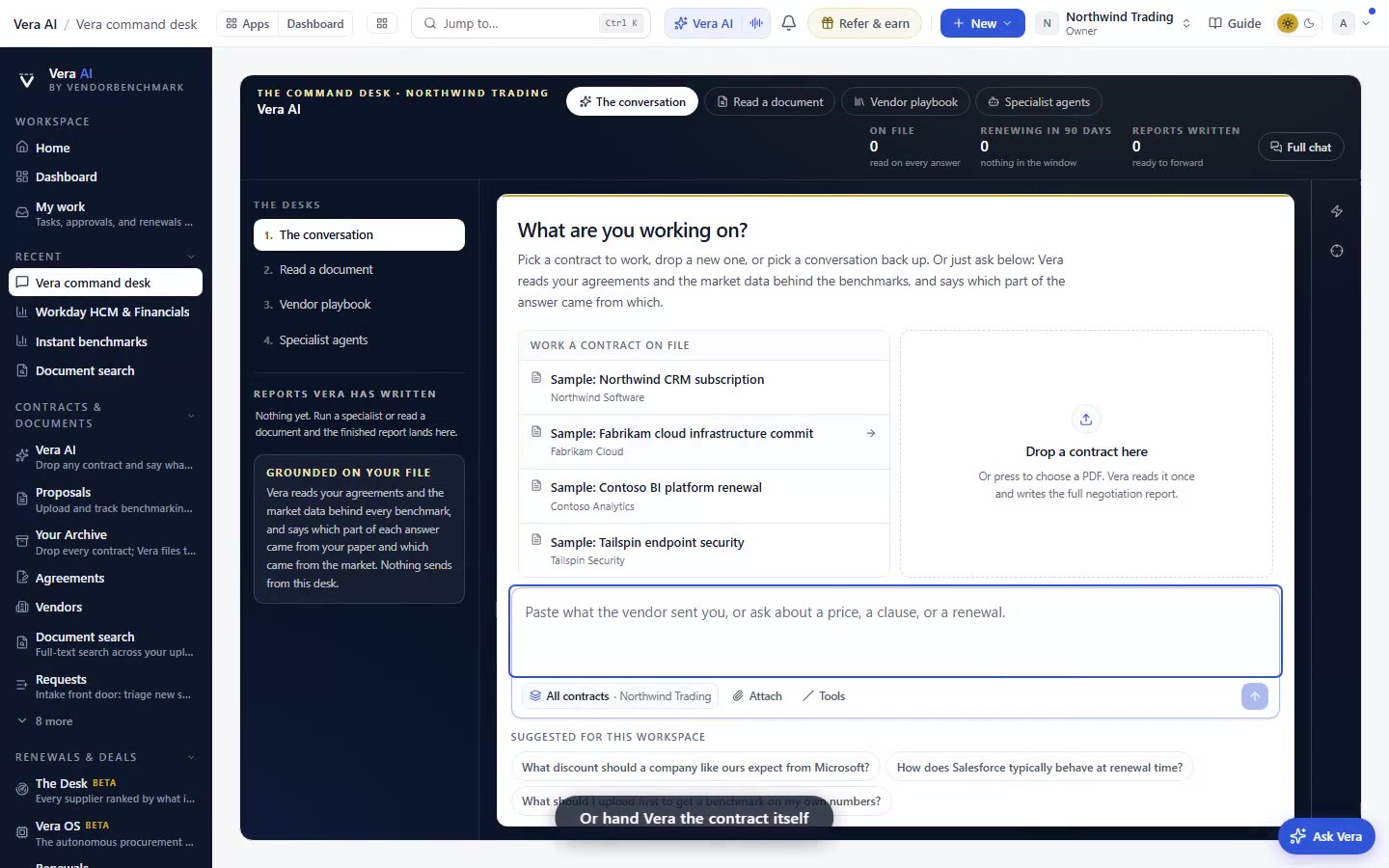
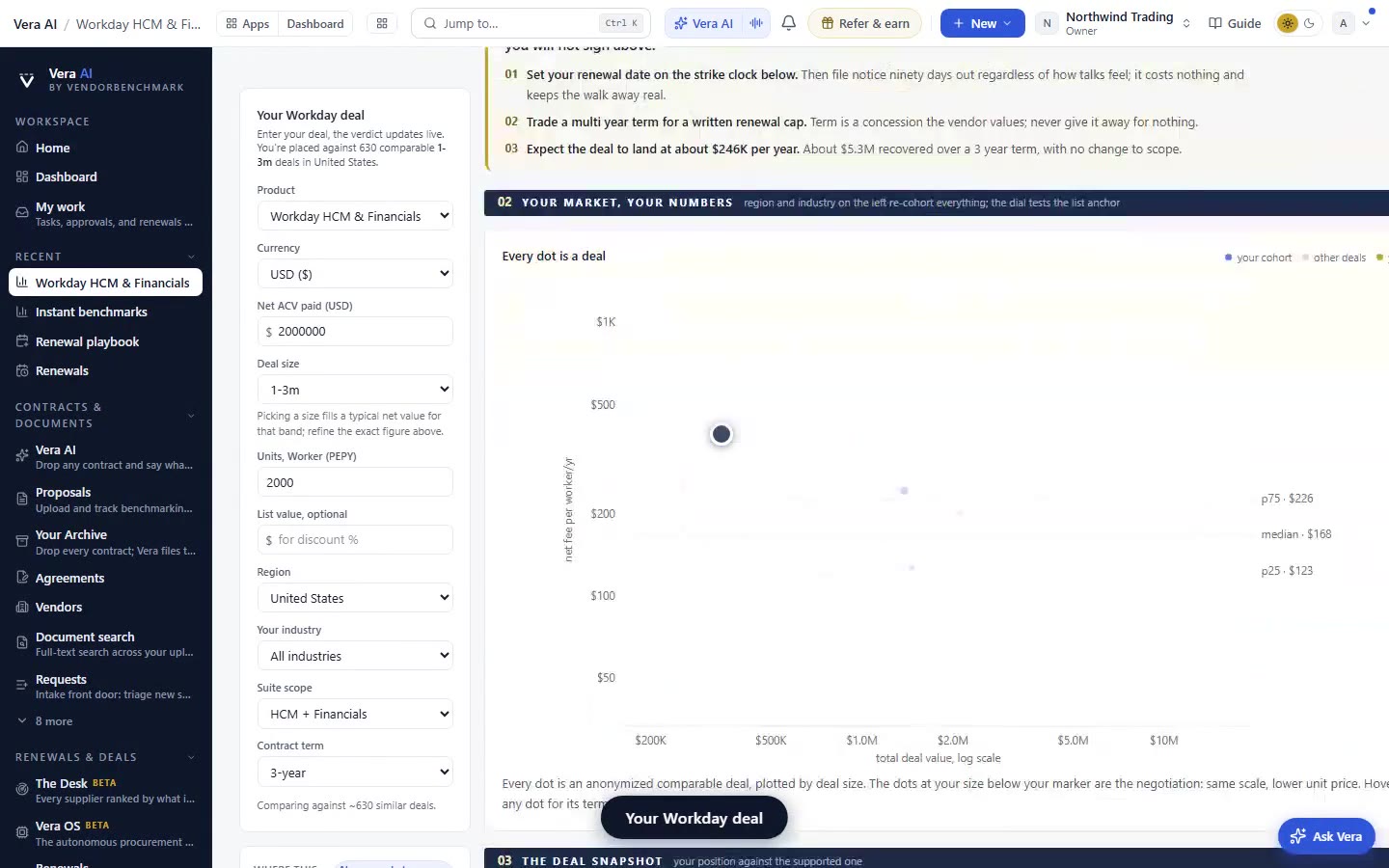
You know the moment. You are on a proposal row for a renewal you inherited, you need the discount curve, the two analyst briefings that framed the last round, and whatever your own team already filed against this vendor. Today those live in four places. So you open four tabs, lose your row, and by the time the research is on screen you have forgotten which line you were checking. The context switch tax is the quiet cost of procurement work, and it is heaviest exactly when a decision is close. We shipped a feature that removes most of it. Anything in the product that is a real thing now answers a right click.
The named problem: research lives away from the row
A benchmark buyer's context is fragmented by design. The vendor sits on the Benchmark Library shelf. The product line sits on a sheet. The proposal, the renewal, the negotiation thread each sit in their own room. The research that should inform all of them, the papers, the analyst briefings, the discount curve document, the recorded sessions, sits in yet another place. Every screen you work in already keeps your work, which solved the losing-your-place problem going forward. What it did not solve was the reaching-for-context problem. You still had to go get the research, and going to get it was the interruption.
The right click is the oldest promise in software: tell me what I can do with the thing under my cursor. We took that literally. Rest on a real entity, right click, and the menu that opens is about that entity, not a generic list of app actions.
What the menu carries
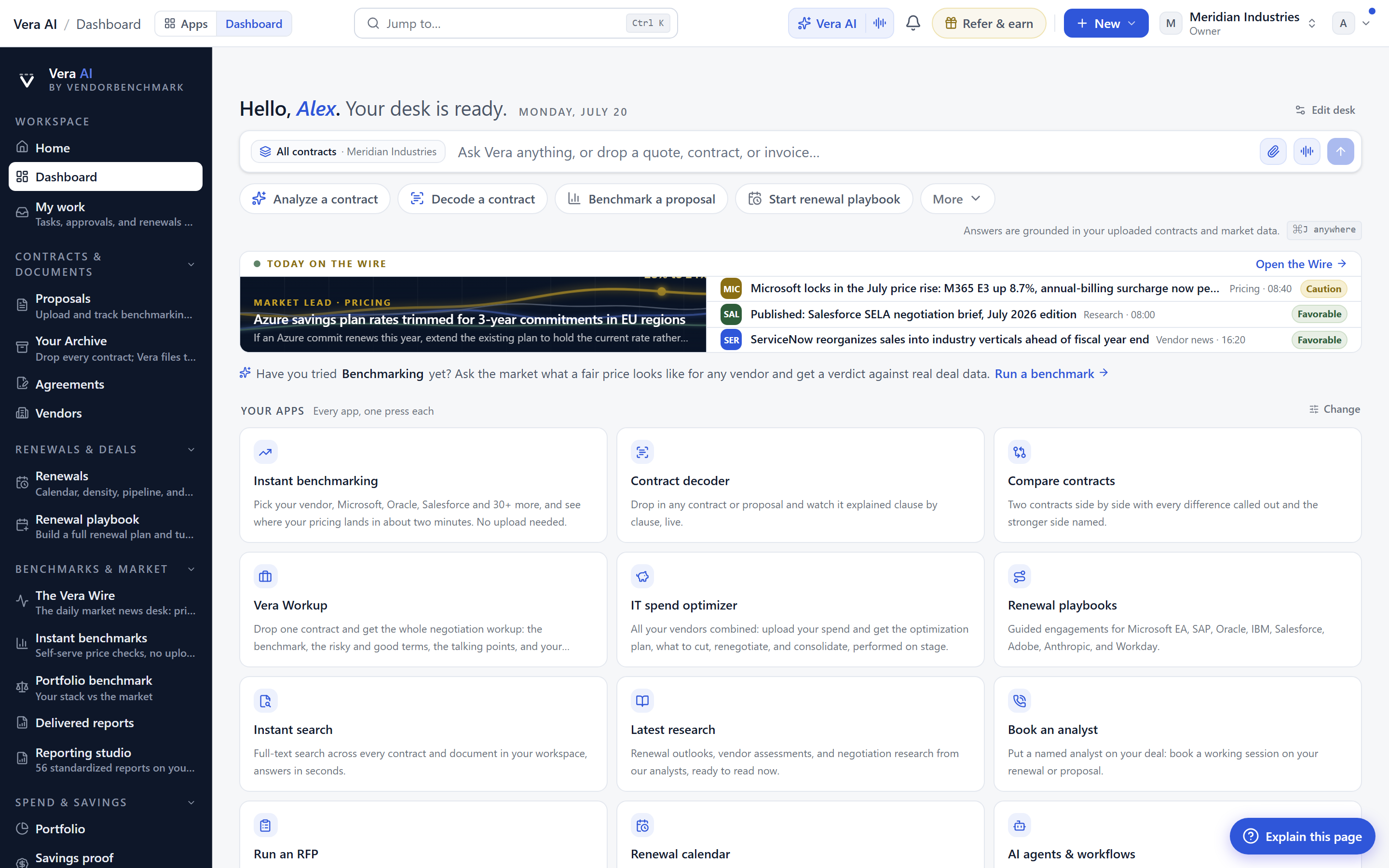
Three things sit in every menu. First, the entity's name, so you know you are acting on the right object and not the row above it. Second, its doors, the direct routes into the rooms where that entity lives, the negotiation thread, the contract record, the renewal. Third, Vera suggests, which opens a gallery built for that specific entity.
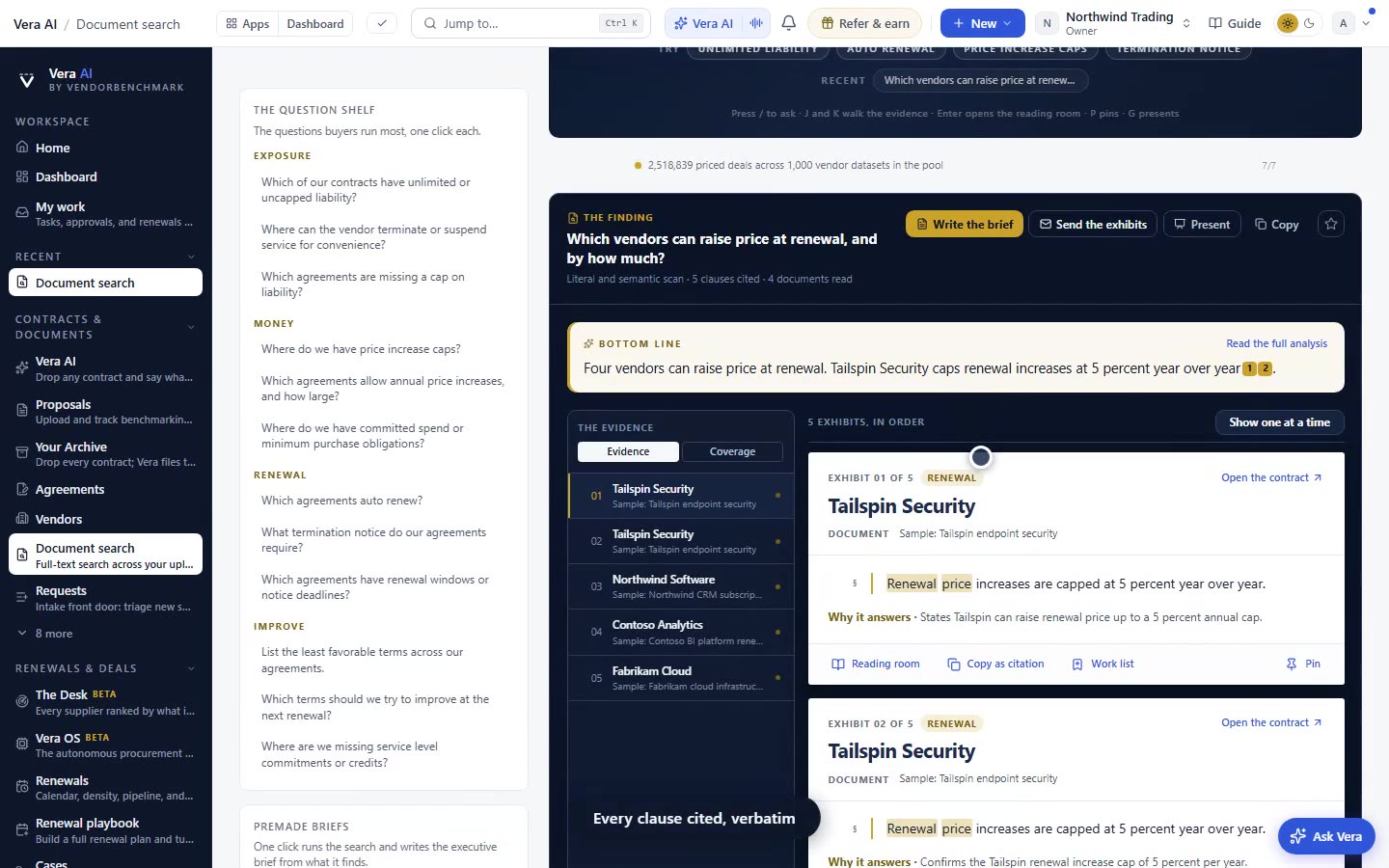
The gallery is not a link dump. It holds the most relevant research papers, each showing its reading time so you can decide before you commit, and those papers now open as styled pages rather than embedded files. It holds the brief film series, the analyst briefings, the vendor's discount curve document, recorded sessions, and, crucially, your own related records. That last item matters most to buyers, because half the context you need is context you already created and then lost track of.
Every card opens where the work happens
A gallery that dumps you into a reader with no way back is just a nicer dead end. So every card in Vera suggests opens where the work happens. A benchmark card lands you in the reading, and because every vendor benchmark opens as the verdict reading, you land on the position, not a wall of bars. A negotiation card lands you in the thread. A discount curve card lands beside the number you are about to counter. The gesture is a shortcut into the flow, not a detour out of it.
When the library has not written the vendor up yet
Honesty is a feature here. The library covers 1,471 vendors, which is broad, but it is not everything. When you right click a vendor the library has not written up, the menu says so plainly rather than showing an empty shelf or, worse, guessing. It offers one button that asks the research library agent to write the brief. That agent is one of the six specialist agents, and the request enters the same background job queue that runs the rest of the estate. You do not get a fake answer. You get a truthful gap and a way to close it.
One menu, four ways in
The right click is the primary gesture, but not the only one. The same menu opens with a long press on touch, so tablet review sessions work. It opens from the star chip that appears when you rest on a row, for people who never learned to right click. And it opens with Shift+F10 from the keyboard, for the buyers who live in shortcuts and never leave the home row. This fits the command desk pattern we have been building toward: Vera as something you reach for reflexively rather than a place you navigate to.
Honest limits
This is a routing and surfacing feature, so it is only as good as what sits behind it. Three limits you should hold in mind. First, Vera suggests ranks relevance, it does not read for you. If you skip the reading time and open nothing, the gesture has saved you nothing. Second, the menu only knows entities the product recognises as real. A vendor named only in a pasted paragraph is not yet a real thing you can right click, so the discipline of getting vendors, lines and renewals into the product still pays for itself. Third, when a vendor is unwritten, the agent's brief takes real time to produce, it is not instant. It joins the queue behind the other background work, and a genuinely obscure vendor with thin public evidence will produce a thinner brief. We would rather tell you that than pretend the shelf is always full.
None of that undoes the core change. The distance between a real thing on your screen and everything known about it used to be four tabs and a search. Now it is one gesture, and the gesture is the same whether you use a mouse, a finger, a chip, or the keyboard. If you want to see how the surfaced research is built, the benchmark library is where those shelves are filled. Right click a vendor and see what your own library already knows on the benchmarking page.
Want to be updated when major licensing and pricing changes land? One analyst brief a week: the price rises, metric changes and audit campaigns that move software costs. Work email only.
Morten brings two decades of enterprise and software procurement, with stints across Oracle, IBM, SAP, and Salesforce shaping how he reads a deal. He has led sourcing through hundreds of renewals, from mid market order forms to nine figure global agreements, and learned that the buyers who win are the ones who walk in knowing the market. He built VendorBenchmark to make that pattern recognition repeatable.