One renewal is now a path of seven phases
The renewal desk now reads a single agreement as a path. Seven phases, each on its own instrument, from the first want to the signature, with the plan as step zero.
Most procurement teams do not lose renewals at the negotiation table. They lose them earlier, in the weeks where nobody could say out loud what phase the renewal was in. The agreement sat in a folder, the plan sat in a spreadsheet, the research sat in someone's inbox, and the question what do we press next had no single answer. This update is about that gap. Open an agreement as its plan and the renewal desk now gives it its own rail: the seven phases a renewal actually takes, laid out as steps with due dates, the plan itself as step zero, and a head that states the whole renewal in one sentence with the one press it points at.
The problem nobody schedules for
A renewal is not one task. It is a sequence, and the sequence is the same almost every time: you decide what you want, you research the market, you validate the position, you build the ask, you open the negotiation, you close the terms, you sign. Seven phases. Every buyer knows this shape by heart, and almost no tool renders it. Instead you get a calendar date, a status field that says Open, and a pile of documents with no order. When a colleague asks where a renewal stands, you reconstruct the answer from memory. That reconstruction is the tax, and you pay it every time.
We already gave the renewal plan a way to say what you want and have Vera research it. If you have not seen that, read the renewal plan post first, because this update is the plan grown into a full path. The plan is no longer a standalone artifact. It is step zero of a rail that carries the agreement all the way to signature.
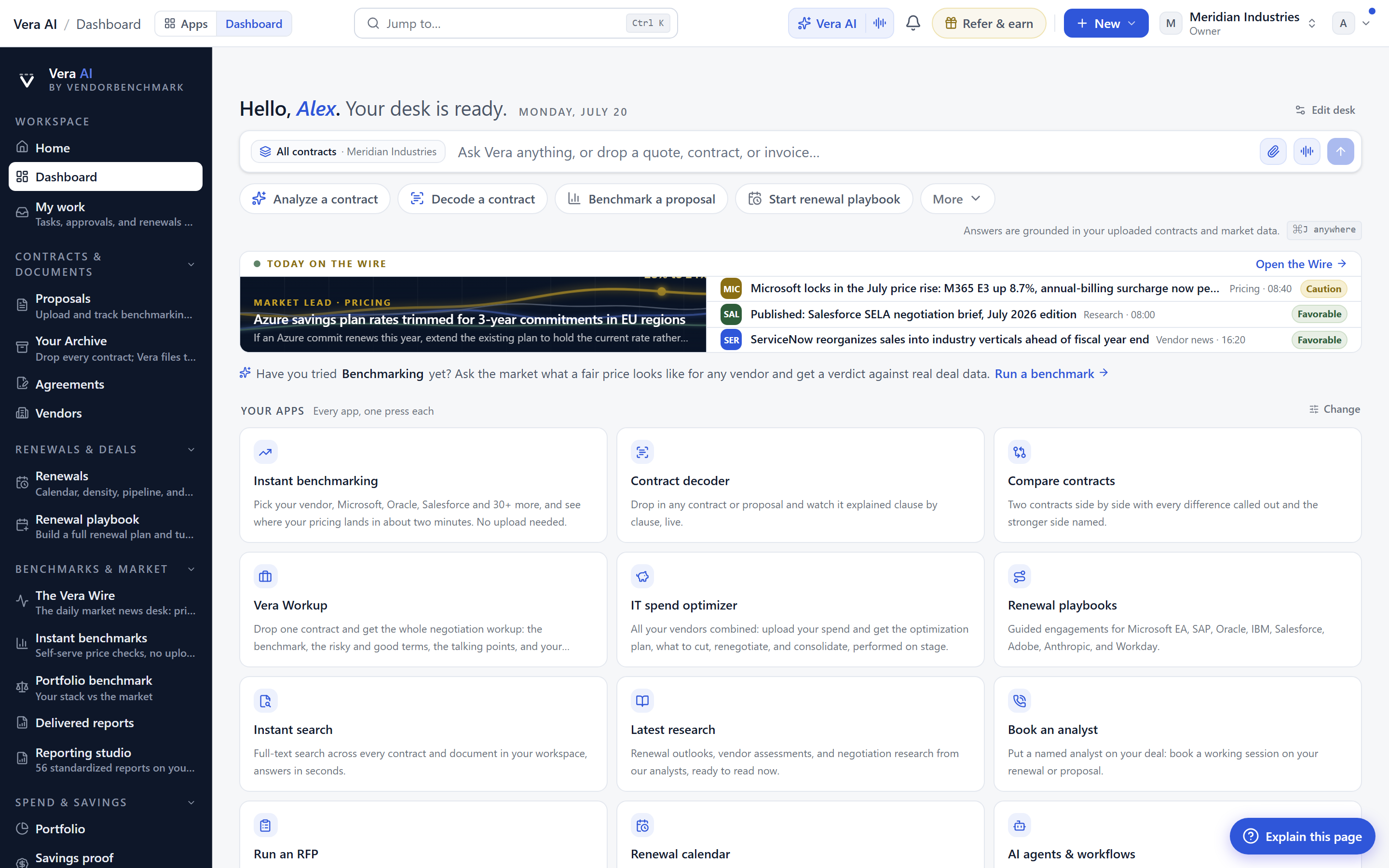
Each phase opens on its own instrument
The rail is not decoration. Each of the seven phases opens on the tool built for that phase and closes with the next one. The want phase opens on the plan where you say what outcome you are chasing. The research phase opens where Vera reads the market and hands you findings. The validation phase opens on the reading, the negotiation phase opens on the war room, and the signature phase opens on the paper. You do not leave the rail to move between them, and you do not lose your place. Esc returns you to the book, which is the desk's home view, so the path is always one keystroke from the wider estate.
The research that used to live in a separate tab now reads in the column beside the plan's table. What Vera found, the reading list, and the AI avatar sit next to the owners, dates, and statuses rather than behind them. If you want the deeper mechanics of how research renders as pages you can actually read, the styled pages post covers it. The point here is placement: the reading is beside the plan, not filed away from it.
Command rooms fold into the path
Renewal Command used to run as case rooms you opened separately. Those rooms now fold into this path. The case room is not a different place you visit, it is a phase you are already standing in. This continues the direction we set when the renewal record became a room in the desk, and it removes the last seam between planning a renewal and running it. There is one rail, and Command lives on it.
Starting a renewal is now one page under the book's rail. The paper sits at the top, the four sections sit side by side, and there is one press to begin. No blank dashboard, no setup wizard, no deciding which room to open first. You name the agreement, you press once, and the path assembles with the plan as step zero. This is the same philosophy behind starting with an interview rather than a blank dashboard, carried into the renewal itself.
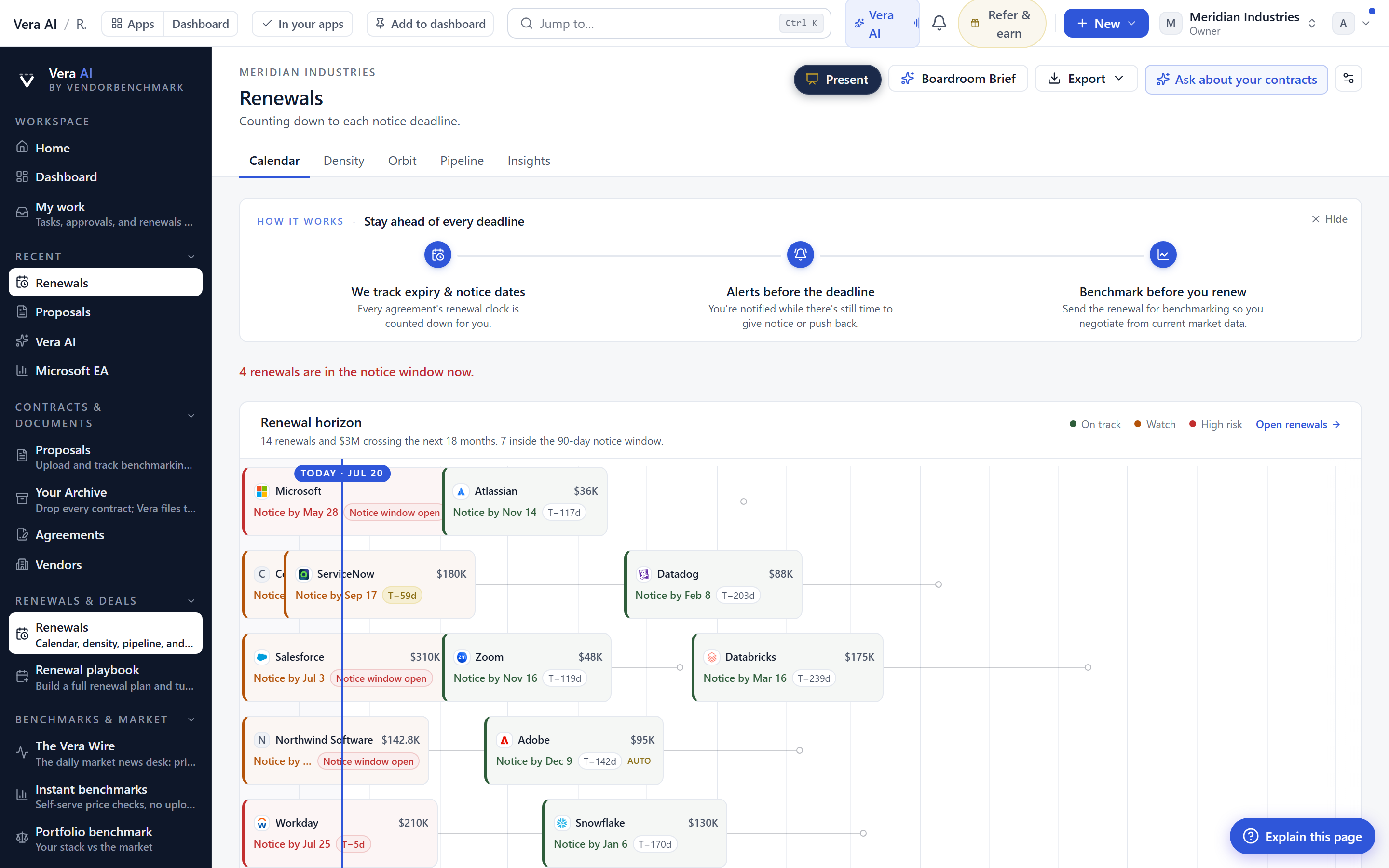
What changes for the buyer
The honest limits
Be clear about what this does not do. The seven phases are the shape of a standard renewal, and not every renewal is standard. A co-terminated bundle, a multi entity global agreement, or a mid contract restructure will not always map cleanly onto seven steps, and you may find yourself running a phase that the rail did not anticipate. The rail gives you order, not a rule. You still own the judgment about when a phase is genuinely closed versus when you pressed the button to feel progress.
The research in the column beside the plan is as good as the benchmark library behind it, which covers 1,483 vendors. If your vendor is thin in the library, the reading list will be thinner, and you should weight your own quotes and prior invoices more heavily. Vera and the specialist agents surface positions, they do not sign contracts, and the one press at the head advances a phase, it does not negotiate for you. Treat the path as the scaffolding that keeps the work honest and sequenced. The leverage, the relationship, and the final decision remain yours. If you want to see the shape before you commit a live agreement to it, open a plan at the renewal desk and read the rail with an example agreement first.
Fredrik has spent more than twenty years in enterprise software, with time at Oracle, IBM, SAP, and Salesforce before moving to the buy side. He structured and priced the kind of large agreements most buyers only see once or twice in a career, which taught him where the leverage sits and how far a vendor will actually move. He started VendorBenchmark to hand that knowledge to every sourcing team.


