The Document Desk: read any archived contract without leaving the app
Clicking a document in Your Archive no longer dumps a bare file in a new tab. It opens a reading window that keeps the paper, the archive, and the working numbers on one screen.
You know the tab. You clicked a signed contract in Your Archive, a browser tab popped open with a bare PDF, and then you spent the next twenty minutes rebuilding context around a file that told you nothing about itself. What was the annual value on record. What did last year's uplift do. Who else needed to see this. The file was open, but everything you needed to act on the file was somewhere else. The Document Desk closes that gap. Viewing a document now opens a large reading window in the decoder's console style, with the paper in the middle and the two things you always reach for on rails beside it.
The named problem: reading a contract is not the same as understanding it
A buyer opens an archived contract for a reason. Usually a renewal is coming, a vendor has made a claim, or an invoice looks wrong and you need to check the paper. In every one of those cases the raw file is the least useful part. What you actually need is the passage that governs the question, the annual value the record holds, and the arithmetic of what a change to that value costs across the term. A bare PDF in a new tab gives you exactly one of those three, and forces you to assemble the other two by hand.
So the reading turns into archaeology. You scroll for the clause, you open a spreadsheet to price the discount, you search your inbox for the version a colleague sent, and you copy figures between windows that do not talk to each other. The Document Desk was built to keep all of that on one screen, next to the paper, while you read.
What sits on the two rails
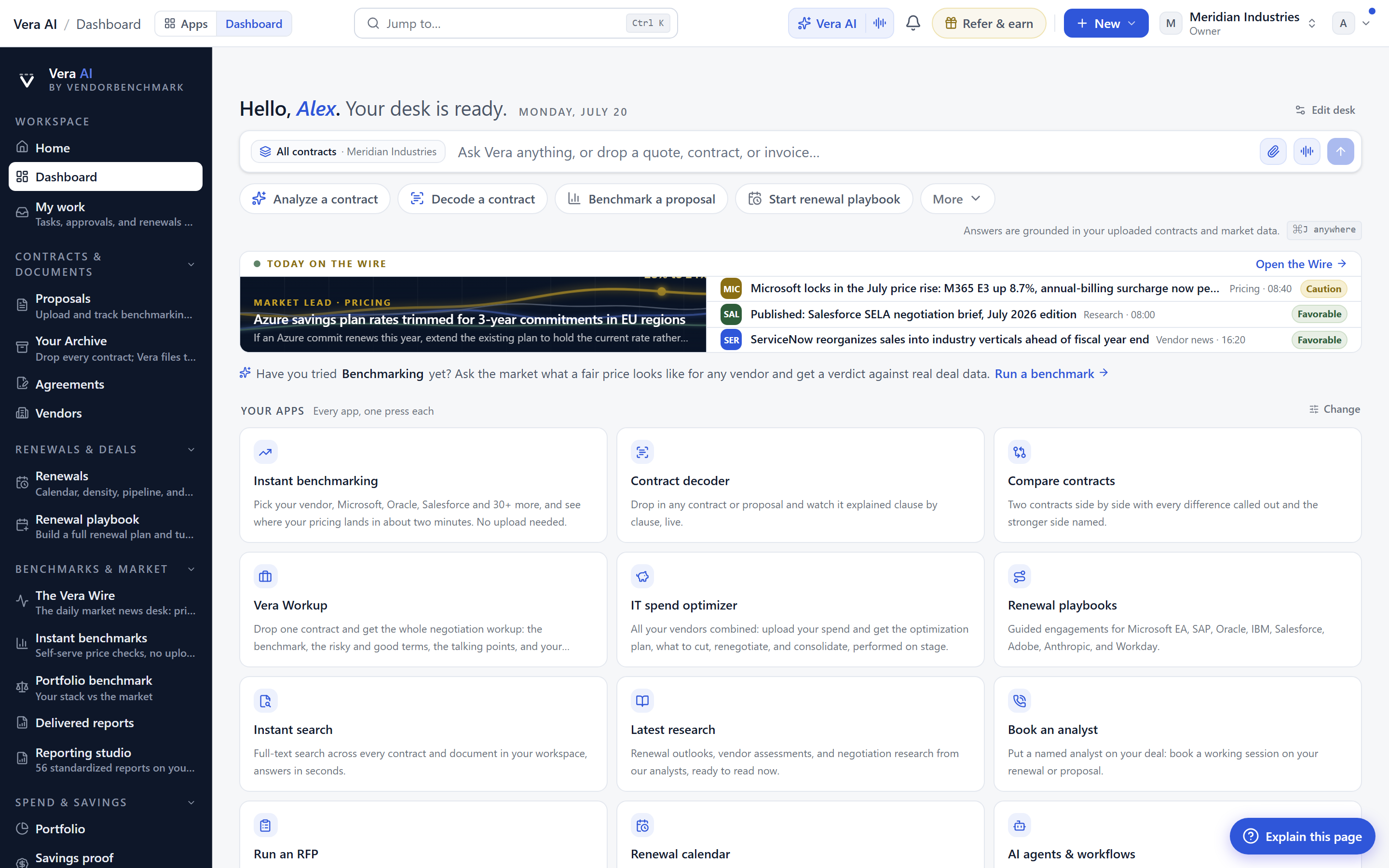
The left rail is your whole archive, searchable, so you never leave the reading context to find the next document. The arrow keys step from paper to paper, which matters more than it sounds. When you are checking a claim across three years of a vendor's contracts, stepping is the difference between a continuous read and three separate hunts. The right rail is the working rail, and it does three jobs while you read.
First, it shows what the scan read, with the verbatim passages quoted rather than paraphrased, so you are always checking the machine against the actual words on the page. Second, it prices a what if discount against the annual value on record, both per year and through term end, so the cost of a position is visible before you argue it. If you have read what compounding does to three years, you know why the through term end figure is the one that changes minds. Third, it hands off. From the desk you can open the contract decoder, run self play, or ask for a second opinion, without exporting the file or losing your place.
Forward keeps the file in the workspace
The most common thing a buyer does after reading a contract is send it to someone. A category lead, a legal reviewer, a finance partner. Historically that meant downloading the file and attaching it to an email, which is how signed contracts end up loose in inboxes, in personal drives, and eventually in the wrong hands. Forward on the Document Desk does the same social job without the leak. Your teammate gets an in-app heads up and an email, but the email links the contract record rather than carrying the file. The document itself never leaves the workspace.
That is a small feature with a large consequence for tenant isolation and audit. Every read stays inside the app, every handoff is a link to a governed record, and nothing has to be re-secured because it was never loosed. If your organisation cares about where signed paper travels, this is the quiet part of the update that your security reviewer will care about most.
Where it fits in the workflow
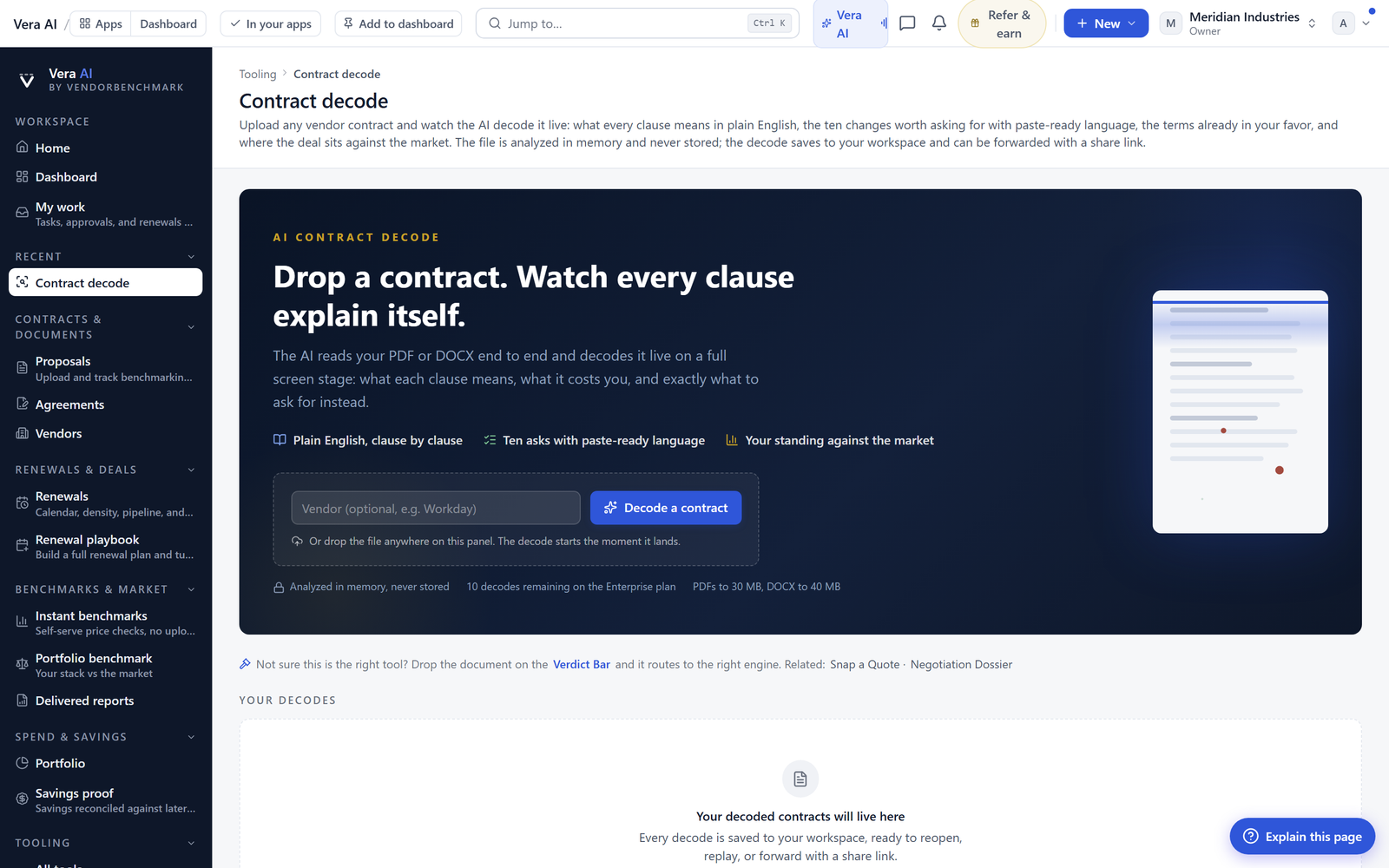
The Document Desk is a reading and triage surface, not a replacement for the deeper tools. Think of it as the front door. You open a contract to understand it, you price a quick what if to see whether it is worth the fight, and then you either close the tab satisfied or hand off into the machinery that does the real work. For a renewal, that machinery starts with a kickoff interview rather than a blank dashboard, and the reading you did on the desk feeds it. For a claim about what a vendor changed, the desk gets you to the clause and the decoder takes it from there.
Honest limits
Three things to be plain about. The what if discount prices against the annual value on record, which means it is only as accurate as that field. If your archive has a contract whose value was never captured or was entered wrong, the arithmetic will be confidently wrong. Fix the record first, then trust the number. The desk shows you where the value came from so you can catch this before it costs you.
Second, the scan reads what is on the page, and scanned paper is imperfect. On a clean digital PDF the verbatim passages are reliable. On a photographed or heavily stamped scan, read the passage against the original, which is exactly why the paper sits in the middle and the scan sits on the rail. We put them side by side so you can disagree with the machine in one glance.
Third, this is a reading and triage surface, not a substitute for judgment. Pricing a what if discount tells you the arithmetic of a position, not whether the vendor will accept it. That question belongs with the benchmark and the negotiation tools. The Document Desk gets you to the point of decision faster and with the right numbers on screen. It does not make the decision for you, and it should not.
The update ships to every workspace now. Open Your Archive, click any document, and the desk opens where the tab used to. If you have not yet asked the machine to explain what changed since last year, the desk is a good place to start that read before you send the question to your inbox agents.
Fredrik has spent more than twenty years in enterprise software, with time at Oracle, IBM, SAP, and Salesforce before moving to the buy side. He structured and priced the kind of large agreements most buyers only see once or twice in a career, which taught him where the leverage sits and how far a vendor will actually move. He started VendorBenchmark to hand that knowledge to every sourcing team.


