Contract decodes are no longer rationed by plan
The decode allowance is retired. Every plan can now read a document without watching a counter tick down. Written AI reports still draw on your analyses allowance.
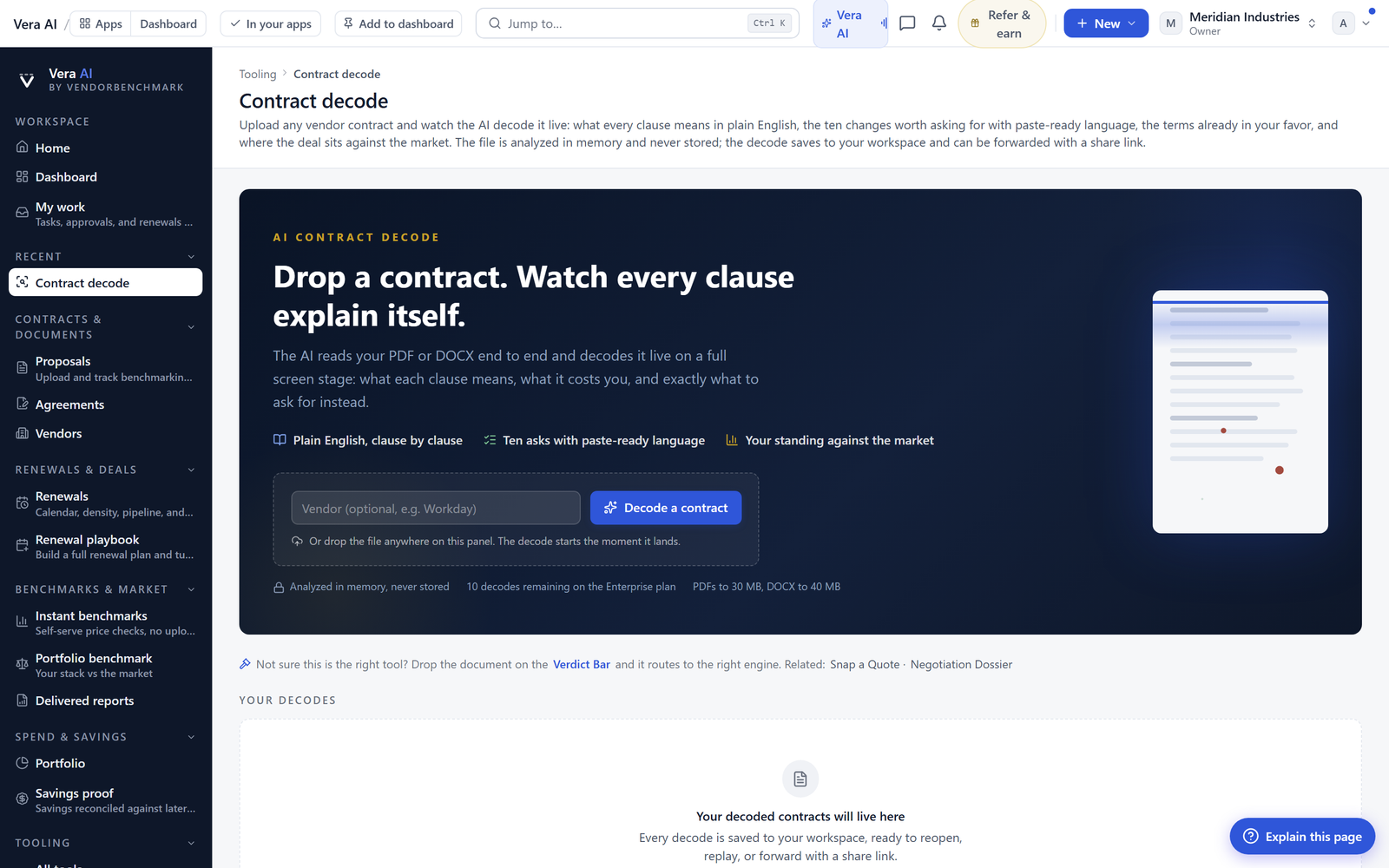
There is a small friction that shapes how procurement teams behave, and most of us stopped noticing it. You have a contract in front of you, a renewal amendment or a fresh MSA, and you want to know what is actually in it before you spend real time on it. But the tool tells you the read is not included on your plan, or that you have already used the one decode you were given this cycle. So you do the human thing. You read it yourself, or you park it, or you ask someone senior to burn their allowance on it. As of this release, that friction is gone. Reading a document is now open on every plan, Free included. You can decode any contract without a plan gate and without a countdown.
The named problem: rationing the cheapest step in the workflow
The decode is the entry point to almost everything else you do here. It is the moment a PDF stops being an image and starts being structured text you can question. Rationing that step was always backwards. It meant the least expensive computation in the platform, reading, was the one you had to budget most carefully. Buyers told us they self-censored: they would not decode a low-value contract in case they needed the allowance later for a big one. That is a bad way to run a desk. The expensive work is the written analysis, the dossier, the playbook, the benchmark comparison. Reading is not expensive. So we stopped charging you for it in allowance terms.
The practical effect is that the screen changes what it tells you. Where it used to count down a remaining decode balance, it now says the read is included. No refusal because your plan does not carry decodes. No refusal because you already spent the one you had. The gate is retired.
What the change does not touch: your AI analyses allowance
Here is the honest boundary, and it matters. Opening a decode is free on every plan. Turning that decode into a written AI deliverable is not. Where a decode feeds a written AI report, and the negotiation dossier and the playbook are among those reports, that report still counts against your AI analyses allowance. We separated the two deliberately. Reading is now unmetered. Composing a document from that reading, the part that draws on the specialist agents and produces something you can hand to the CFO, still draws down your analyses count.
This is the right split because it maps to real cost and real value. A decode answers can I see what is in here. A report answers what should we do about it, in writing, with the terms argued. The second is the deliverable you actually take into the room. If you have not thought about why the written artefact beats a quick answer, we made that case in from chat to deliverable.
The one ceiling that remains: daily fair-use
Removing the allowance does not mean the decode is infinite. There is a single ceiling left, and it is a daily fair-use cap. This exists to keep the shared infrastructure honest for everyone, not to ration you by plan tier. In normal desk work you will not meet it. If you are doing a genuine bulk pass, for example decoding an entire acquired estate in an afternoon, you may bump the daily cap, and that is the moment to talk to us about the right way to run that volume rather than pushing it through the interactive tool one file at a time.
The distinction is worth stating plainly. The old limit was a plan gate, a commercial rule about what your subscription entitled you to. The new limit is an operational rule about what the platform can serve in a day. One was about your wallet. The other is about the pipes. We kept the pipes rule and dropped the wallet rule.
How this fits the rest of the desk
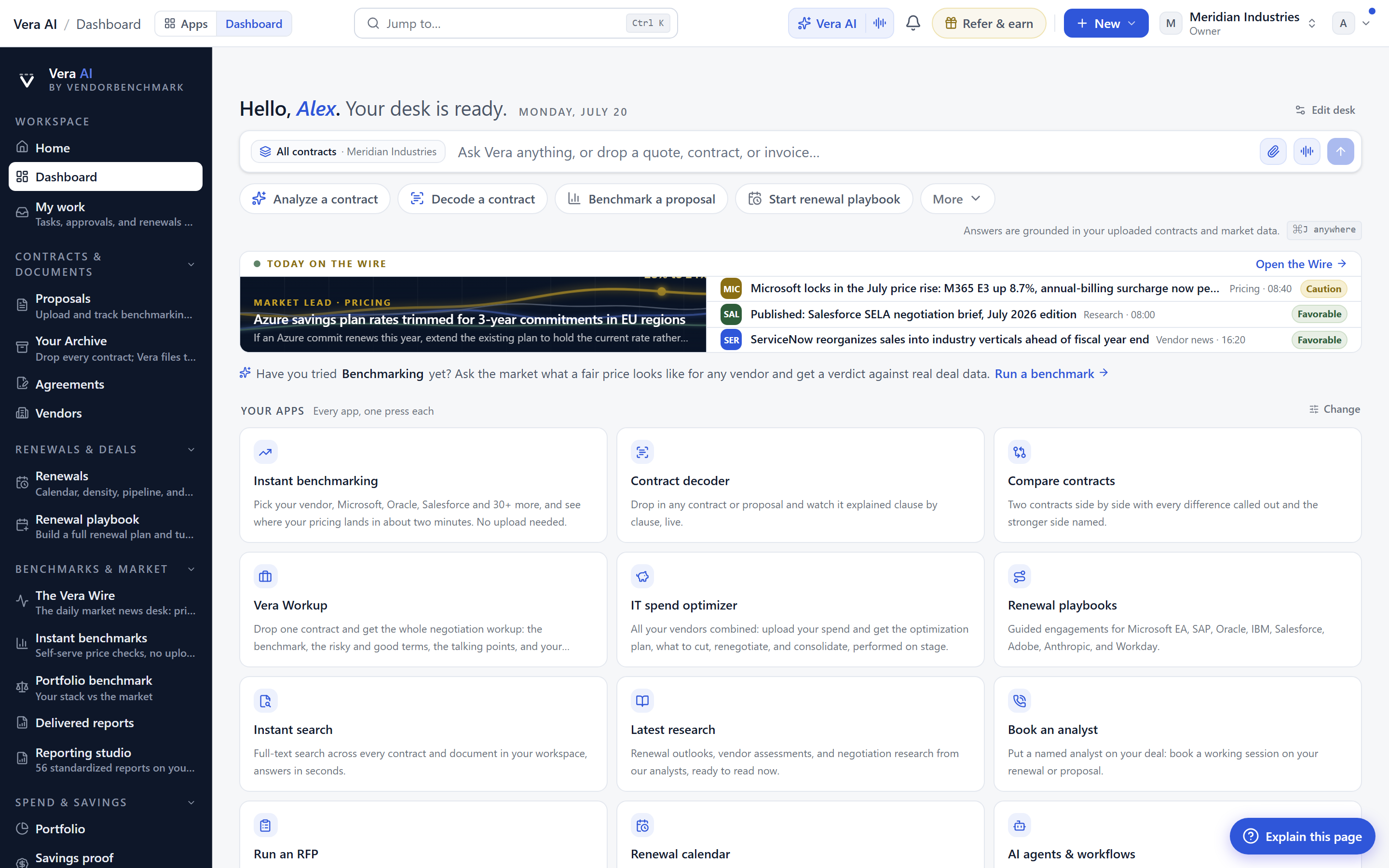
A free decode changes the sequence of a buyer's day. You can now read first and decide second, on any document, without spending budget to find out whether it was worth reading. That flows naturally into the parts of the platform that do carry a cost. Once a decode surfaces a weak indemnity or an aggressive uplift clause, you can hold it against the clause library positions to see how far it sits from where you want to land. If the clause is an auto-renewal with a short notice window, the decode is where you catch it, and the auto-renewal fix is where you close it.
For low-value contracts, the decode may be all you ever need. You read it, you confirm nothing is on fire, you move on, and you have spent no allowance. For the deals that matter, the decode is step one and the written report is step two, and only step two costs you. That is a cleaner mental model than the old one, where even looking was rationed.
The honest limits
Two things this change is not. First, it is not a free upgrade to unlimited analysis. If your habit was to decode a contract and immediately generate a dossier every time, your analyses allowance will feel exactly as it did before, because the dossier is the metered part and always was. What is now free is the reading, not the writing. If most of your value came from the written artefacts, this release does not change your economics much. If a lot of your reading never needed to become a report, it changes them a great deal.
Second, a decode is a read, not a verdict. It structures the document and flags terms, but the judgement about whether a clause is acceptable still belongs to you, ideally armed with the benchmark data behind it. A free read makes it cheaper to start that judgement, not automatic. Treat the decode as the moment the document becomes workable, and keep the negotiation itself where it belongs, with the person on the buyer's side of the table.
Net position for a buyer: the cheapest step is now genuinely free, the expensive step is priced where the cost actually sits, and the only remaining ceiling protects the service rather than your budget. Go read the next contract on your desk. It costs you nothing to look.
Want to be updated when major licensing and pricing changes land? One analyst brief a week: the price rises, metric changes and audit campaigns that move software costs. Work email only.
Morten brings two decades of enterprise and software procurement, with stints across Oracle, IBM, SAP, and Salesforce shaping how he reads a deal. He has led sourcing through hundreds of renewals, from mid market order forms to nine figure global agreements, and learned that the buyers who win are the ones who walk in knowing the market. He built VendorBenchmark to make that pattern recognition repeatable.


