The Vera Academy: twelve courses from first sign in to analyst
The onboarding gap between buying the platform and using it well just got a structured path. Twelve chaptered courses, two levels, one instructor voice.
Here is a problem most procurement leaders recognise and few budget for. You buy a benchmarking platform to sharpen your negotiations, and then a new analyst joins, or an existing teammate is asked to run their first renewal, and the tool sits half used. Not because the person is slow, but because nobody ever showed them the three questions a benchmark actually answers, or where the Desk lives, or how to read a delivered report without treating every line as gospel. The capability is on the shelf. The knowledge to reach for it is not. Today we are shipping the fix: the Vera Academy, twelve narrated courses in the video library that take a teammate from their first sign in to competent daily craft.
The named problem: capability without fluency
Software rarely fails because it lacks features. It fails at the point of adoption, when the person who is supposed to use it cannot map their real job onto the buttons in front of them. In procurement this is expensive in a specific way. A renewal that could have been benchmarked in twenty minutes gets negotiated on instinct, or gets escalated to your one power user who is already stretched. The estate keeps growing, the renewals keep landing, and the tool that was meant to give everyone leverage becomes the private instrument of two people. We have watched teams do excellent work with our portfolio benchmarking and never once open the decoder suite, simply because no one told them it was there or what it was for.
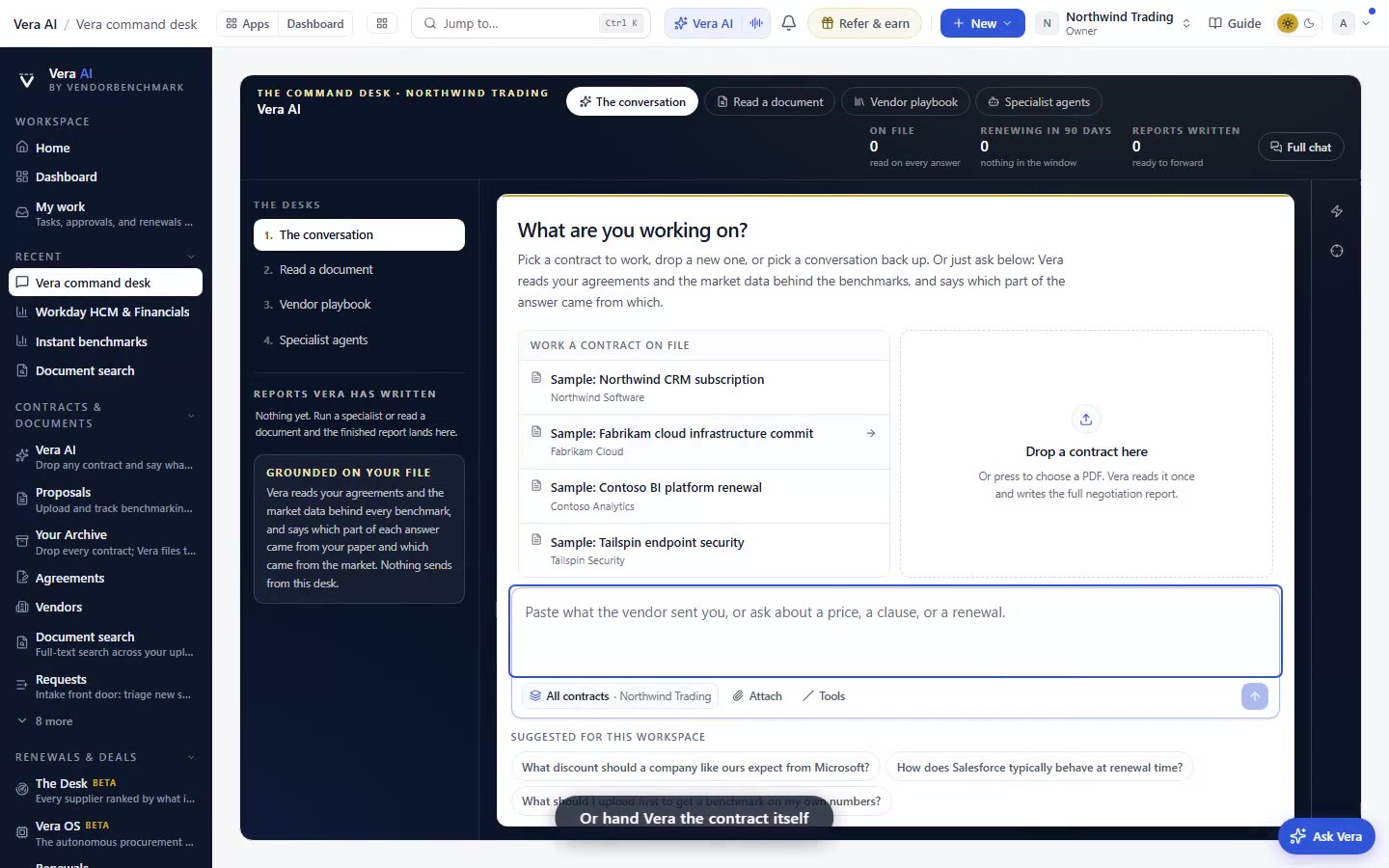
The Vera Academy is not a marketing tour and it is not a wall of help articles. It is a taught curriculum, structured like a training program, with a foundations level for the first day and a core level for the daily work. Every course teaches in chaptered lessons, closes with an assignment on sample data and a two question check, then hands you to the next course. One calm instructor voice runs throughout, so the experience feels like a single class rather than twelve stitched clips.
Foundations: first sign in to a safe practice estate
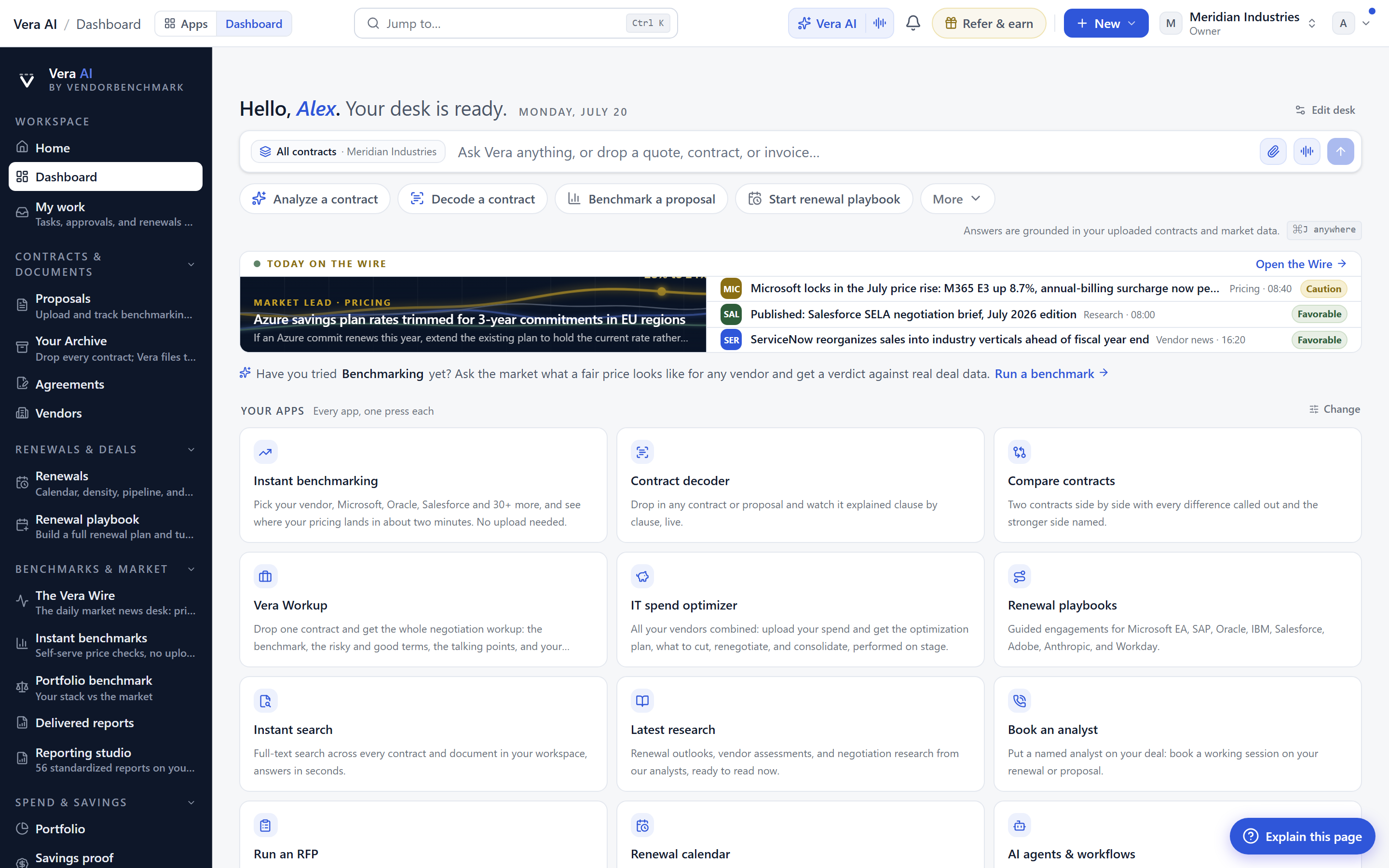
The foundations level is built for the first forty minutes of watching, and it assumes nothing. It starts with the three questions every benchmark answers, because a teammate who understands what a benchmark is for makes better use of everything that follows. From there it covers the rail and the palette so navigation stops being guesswork, two factor and notifications so the account is set up properly, the dashboard and the Desk so the person knows where their work lives, and a first conversation with Vera so they experience the analyst answering with cited figures rather than opinions.
The level closes on the Northwind sample portfolio, a practice estate that lets a new teammate do real actions with zero real consequence. This matters more than it sounds. Nobody should learn the negotiation war room by rehearsing on your actual Oracle renewal. Northwind gives them a full estate to poke at, and every foundations assignment runs against it. By the end they have a safe place to practice and a clear sense of what the tool is for. If they want to see how the analyst travels beyond the app, the course points them toward Vera in Slack and Teams.
Core: the daily craft of an analyst
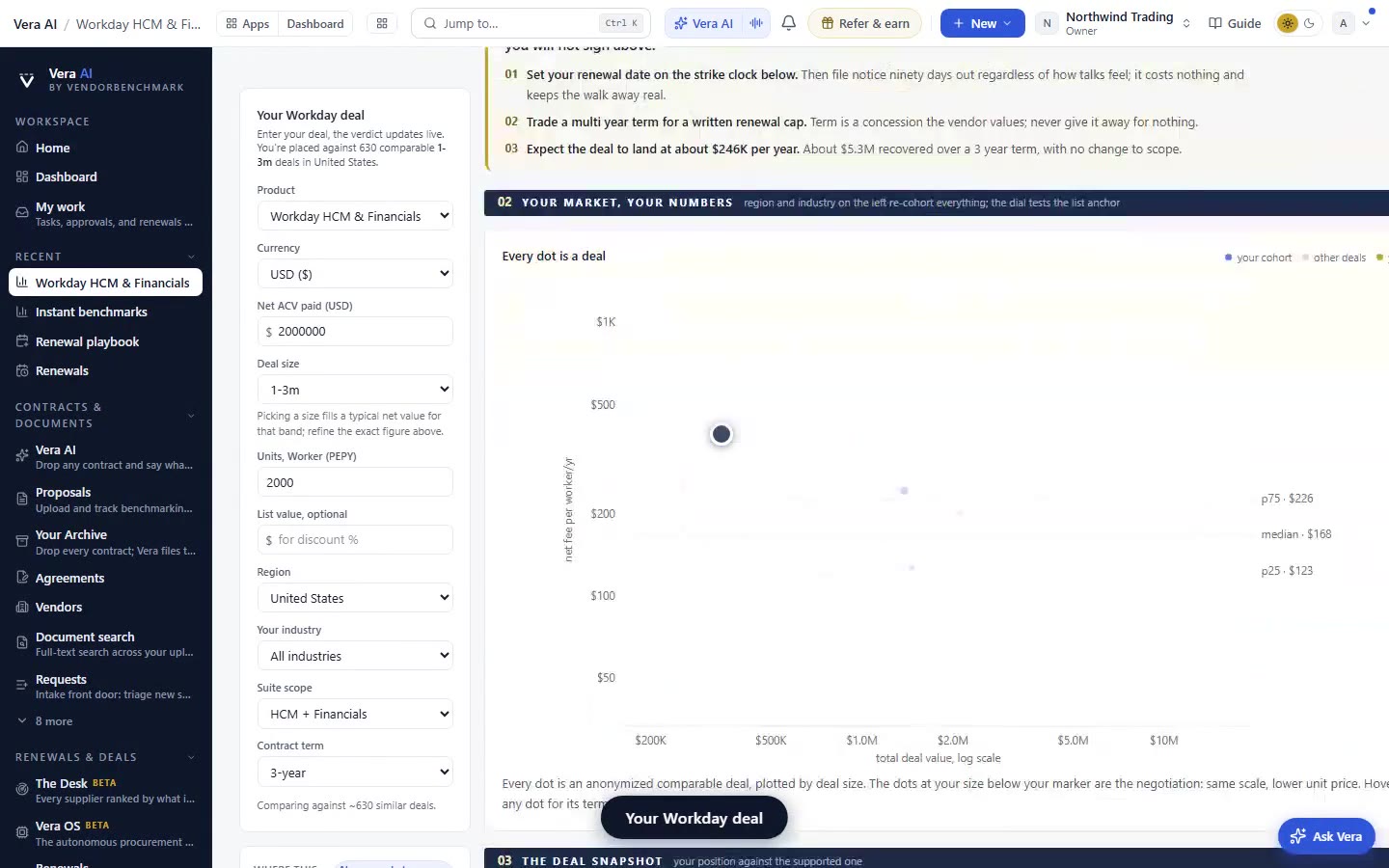
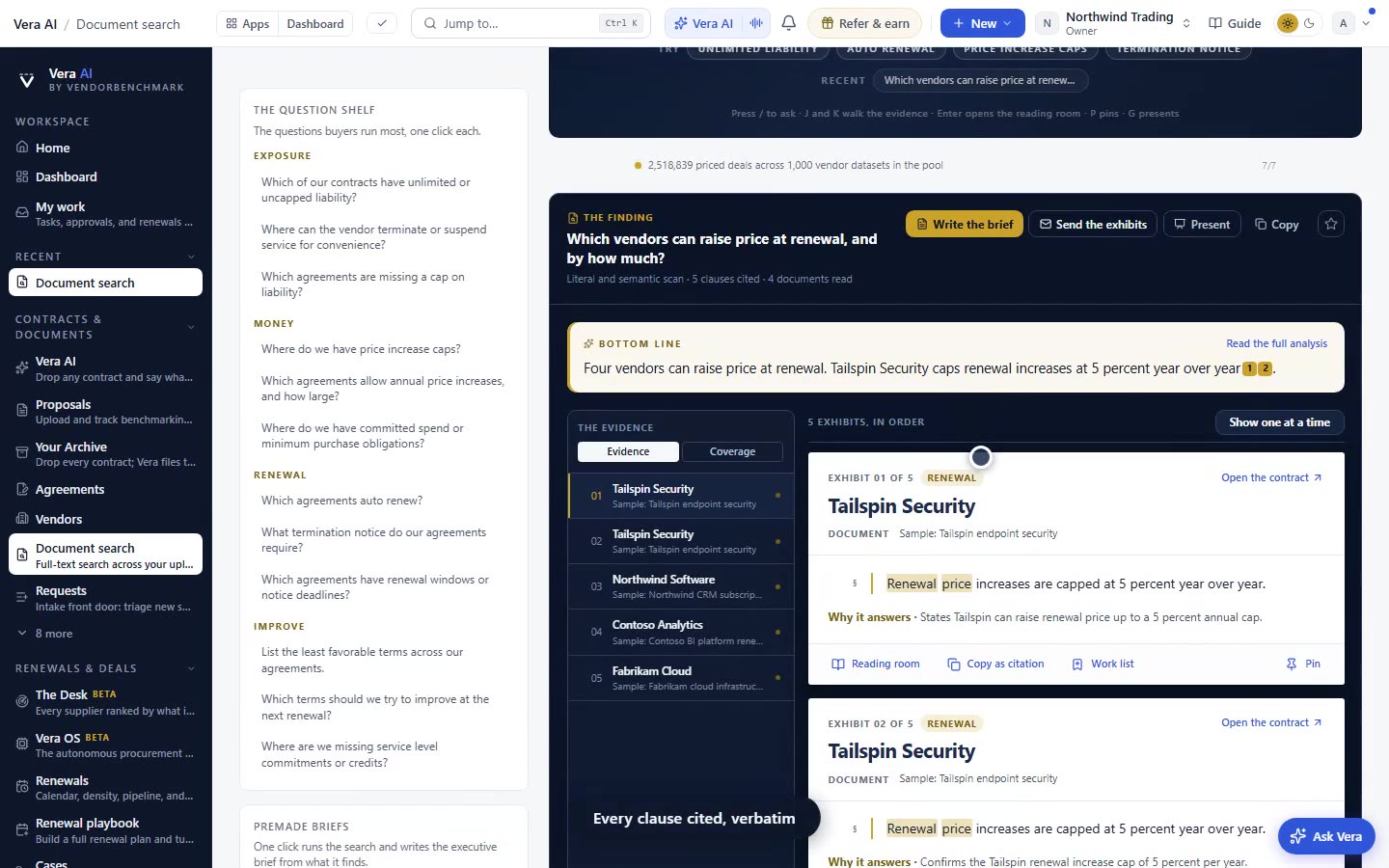
The core level teaches the work you actually pay for. It opens with benchmarking fundamentals grounded in the doctrine, so the discipline comes before the buttons. It walks the vendor library and its case rooms, teaches how to read a delivered report like an analyst rather than a spectator, covers the decoder suite for contracts, explains how to choose the right quote tool for the situation in front of you, and closes on the spend optimizers. This is the difference between a person who can open a benchmark and a person who knows what to do with the percentile bars once they see them.
Two courses in this level pair naturally with existing reading. The decoder suite lesson sits beside our guide to decoding a contract in a minute and what to look for first, and the quote tool course connects to the free tier so a teammate can practice the free price check before they ever touch a live quote. The point of the core level is fluency under pressure. When a renewal lands and someone asks what a good discount looks like, the analyst should already know how to answer with a figure and a source.
How it fits the workflow
The Academy is not a separate destination you have to remember to visit. It lives in the video library, on the Training shelf, right next to the desk your teammate is learning to operate. The intended path is simple: a new person watches foundations on day one, practices on Northwind, then works through the core level over their first week or two while doing real tasks alongside. The assignments and two question checks give a manager a light way to confirm someone has actually absorbed a course before they run a real deal on it. You can browse the full shelf at the video library.
Honest limits
Be clear about what the Academy is and is not. It is training, not certification. The two question check confirms a course was watched and its core idea landed. It does not make anyone an expert negotiator, and it will not replace the judgment that comes from running real deals. A teammate who finishes all twelve courses is competent to use the tool, not seasoned in the market.
Second, the courses teach the platform as it stands today. As we ship new capability, some lessons will lag the product until we refresh them, so treat the in app help and release notes as the source of truth when the two disagree. Third, the Academy teaches process and craft, not your organisation's policy. It will not tell your teammate what your approval thresholds are, which vendors are strategic, or how your legal team wants riders handled. That context still comes from you. And finally, forty minutes of foundations gets someone safely oriented, but the core level rewards time. The teams that get the most from it treat the courses as reference to return to, not a box to tick once. Learning to read a delivered report, or to run a proper post mortem that compounds into your next deal, is a habit, and habits take more than one watch to set.
Want to be updated when major licensing and pricing changes land? One analyst brief a week: the price rises, metric changes and audit campaigns that move software costs. Work email only.
Morten brings two decades of enterprise and software procurement, with stints across Oracle, IBM, SAP, and Salesforce shaping how he reads a deal. He has led sourcing through hundreds of renewals, from mid market order forms to nine figure global agreements, and learned that the buyers who win are the ones who walk in knowing the market. He built VendorBenchmark to make that pattern recognition repeatable.