An AI can read a stack of order forms faster than any analyst. It can also misread a metric, count a server twice or miss the amendment that changed a quantity. A license position that goes in front of an auditor or a vendor cannot carry that risk.
That is why every Same Day ELP in Vera AI by VendorBenchmark passes two people before it reaches you. The AI does the reading and the first draft. A licensing analyst reviews every line. A second analyst runs the QA check. Here is what each of them checks, and why the draft stays on our side.
The draft is where the work starts
The AI reads every file you send and builds the first draft, entitled against deployed, line by line. It lands within the hour of a complete submission. That speed is what makes a 24 hour clock possible, and it is also why the draft is never the deliverable.
The review exists for the calls a draft should not make alone: which document governs a quantity after an amendment changed it, how a product rule counts a metric on your estate, and whether a gap is real or a reading error. Those calls decide the exposure, so a person makes them.
What the reviewing analyst checks
On our side every ticket sits in one queue, soonest due first. The reviewer opens the AI draft beside the files you sent and works it line by line.
- Your terms. Each entitlement against the agreement, the amendments and the order forms still in force, so the owned side of every line rests on your own paper.
- The product rules. Each deployed count against how the product is licensed, whether by users, employees, cores or the vendor's own measurement.
- The gaps. Anything missing from the submission. The analyst asks on the ticket, the clock pauses, and the review picks up again when the file lands.
The review lands the same day. When it is done, the analyst sends the position to QA. You can follow all of it without seeing the draft: the ticket shows the five stages, what has happened beside what is still to come with an expected time, and Messages with the analyst.
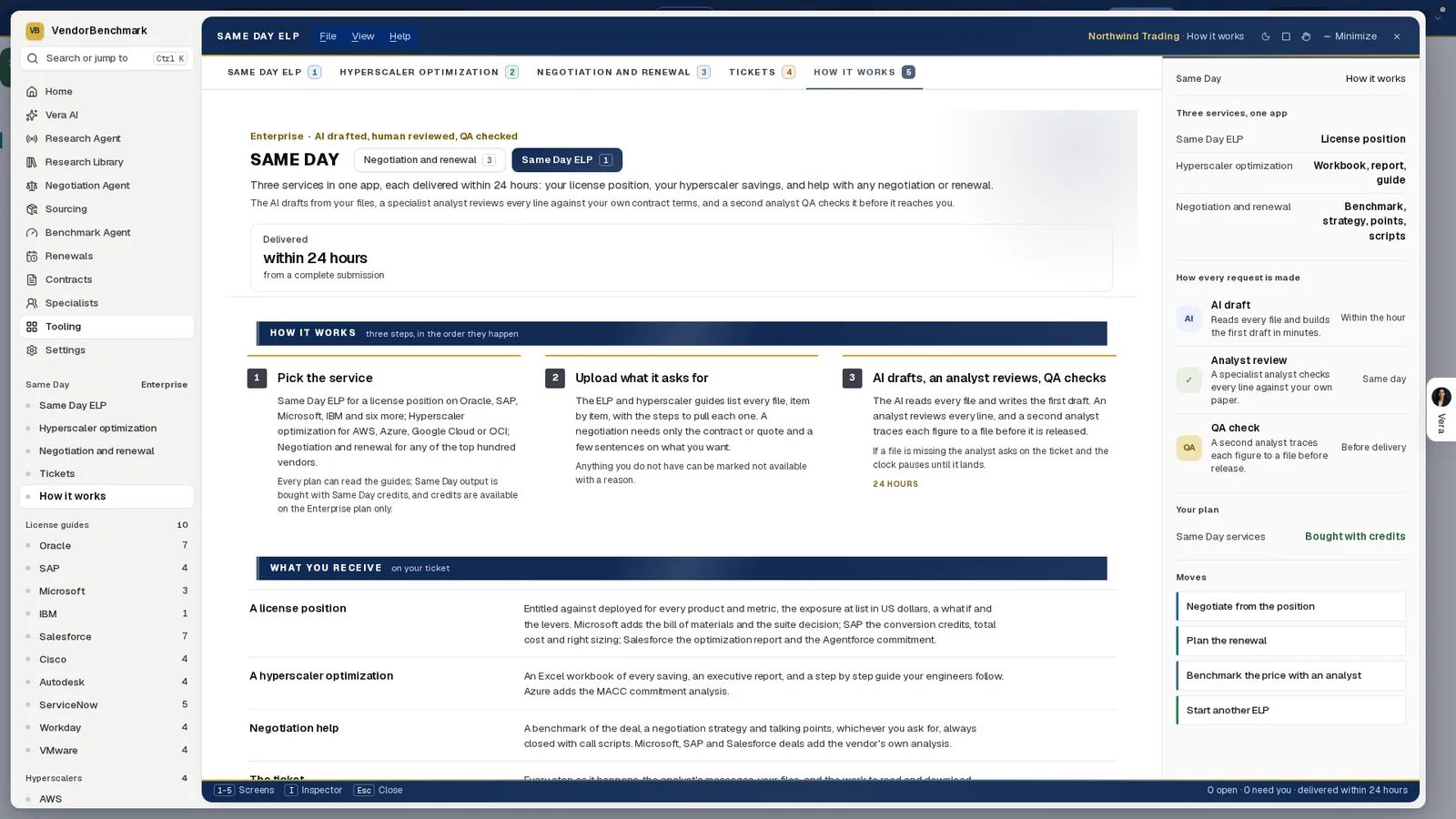
Step three, in plain words. On the How it works tab: the AI reads every file and writes the first draft, an analyst reviews every line, and a second analyst traces each figure to a file before it is released. A missing file pauses the clock until it lands.
What the QA analyst signs off
The second analyst did not write the review, and that is the point. Their job is narrower and stricter: trace each figure to a file before the position is released.
- Every figure traced. Each number in the position goes back to a line in your paper or your data.
- Gaps named. Anything missing from the submission is stated, so the position is never quietly incomplete.
- Names on it. The delivered ELP says who drafted it, who reviewed it and who QA checked it.
Only then is the position delivered: the exposure at list in US dollars, the position by product and metric, a what if on every short line, the levers ranked by value and the workbook to download.
Two people on every ELP. You never see a draft.
The Java service puts the same rule on screen. While its build runs, no figure is shown; the app checks each workbook, and the position is released only when both analysts have signed off. The delivered workbooks then list the open questions and the assumptions to read before you send them on.
Why the draft stays on our side
A position travels. The workbook is built to share with finance, legal and the vendor team, and each of them acts on what it says. An unchecked shortfall handed to a vendor becomes its opening number. An unchecked surplus handed to finance becomes a cut that cannot be made. So the draft stays with the analysts, and only the checked position reaches you.
The clock is built around both checks, so you do not trade speed for review: the AI draft within the hour, the analyst review the same day and the QA check before delivery, all within 24 hours of a complete submission. Nights and weekends count, and the clock pauses only while an analyst waits on a file from you.
After delivery, the same analyst
The sign off does not end the conversation. Questions go to the same analyst through Messages on the ticket, and your files stay there behind links that last 60 seconds. When you are ready to act, the next moves sit in the details column: negotiate from the position, plan the renewal, benchmark the price with an analyst, or start another ELP. The offer to draft the email writes the follow up from what the analysts delivered and opens it in your own mail. The decision on each move is yours.
Where it sits
The QA is the part of the service you never see happen. The rest of the guide covers the parts you do.
- How Same Day ELP works follows a request from the four steps to the delivered position.
- What to upload lists the files the reviewer checks your position against.
- Automated or human checked covers when a position with no human operator is enough.
- When a human beats the AI looks at analyst work across the platform.
The Same Day ELP guide covers the whole cluster, and the Same Day ELP page sets out the clock rules.
What to do first
- Send complete paper. The reviewer checks against what you send, so every amendment and every order form in force belongs in the request.
- Answer the questions fully. Why you need it and which entities it covers set the scope the analysts work to.
- Watch the ticket. A question from the analyst pauses the clock. Answer it, upload the file, and the clock restarts.
- Read the sign off. Check the names on the ELP tab, then put your questions to the same analyst.
Questions buyers ask
Why can't I see the AI draft?
Because it is not checked yet. The draft goes to an analyst for review and to a second analyst for QA, and only the checked position is delivered.
What does the reviewing analyst check?
Every line against your own contract terms and the product rules, with the AI draft open beside the files you sent.
What does the QA analyst do?
Traces each figure to a file before the position is released. The QA analyst is a second person, not the one who did the review.
How do I know who checked it?
The ELP tab names who drafted, who reviewed and who QA checked the position.
Do the checks slow the 24 hours down?
The 24 hours already include both checks: the AI draft within the hour, the analyst review the same day and the QA check before delivery.