The Renewal Agent is now a room on the Agent Desk
The renewal desk moves onto the Agent Desk with the same rail, the same book, and the same one sentence head. Here is what changes for a buyer and where the limits sit.
PRODUCT UPDATE · FROM THE ANALYST DESK. If you run renewals for more than a handful of vendors, you know the problem is not any single negotiation. The problem is the switch cost between them. You open a spreadsheet to find the dates, a mail thread to find the last position, a folder to find the contract, and a separate tool to check the market. Every switch loses context, and context is where the money hides. Today the Renewal Agent joins the Agent Desk and wears the same window as the Negotiation and Benchmark agents, so the switch cost falls close to zero.
The problem the buyer already knows
Call it renewal drift. A contract renews on terms nobody chose because nobody had the four facts in one place at the right time. The date arrived, the auto renew clause fired, and the buyer found out in the invoice. We wrote about the shape of this in 300 vendors, 52 weeks, one team, and the root cause has not changed. The facts exist. They are just scattered across four surfaces, and the buyer spends the week before every renewal reassembling them by hand.
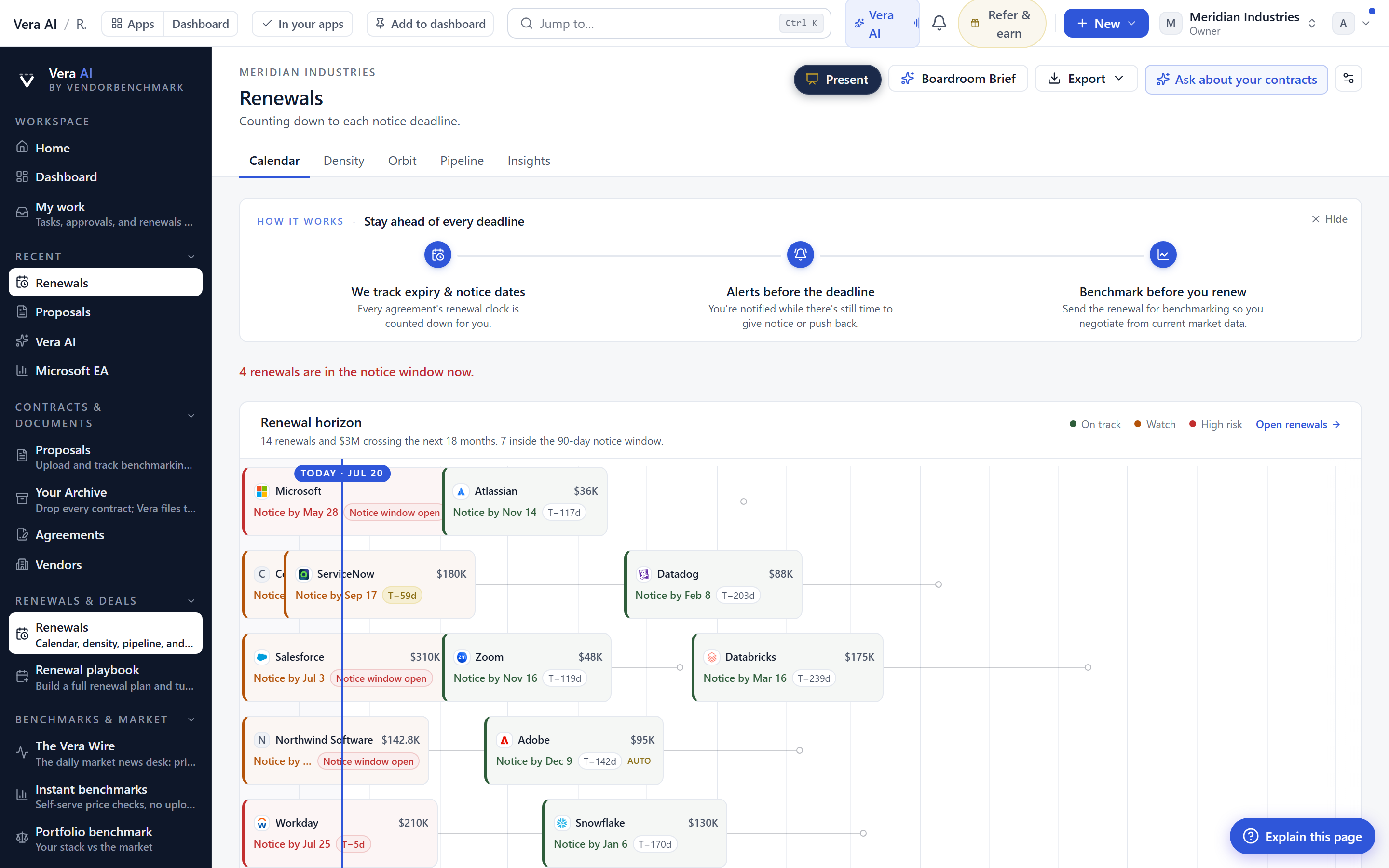
The Renewal Agent answers the scatter with a single window. The head states the book in one sentence and points at the one press that matters this period. The four figures sit as a line beneath it. The book itself reads as rows that span the width of the window. Pick an agreement and the case, with its inspector, reads on the right. Nothing opens in a second application. Nothing asks you to remember where you were.
One dress across the agents
The value of a shared window is that muscle memory transfers. If you have used the Benchmark window, you already know this shape. Five rooms run down a light rail on the left. The head at the top states the book in one sentence and names the single press it points at. The four figures sit as a line. The book reads as rows across the width. The case and the inspector of a picked agreement read on the right. The Negotiation and Benchmark agents established this pattern, and the Renewal Agent now uses it without variation.
This matters because renewals are not a standalone act. A renewal is where benchmark evidence, contract terms, and a negotiation plan converge. When all three agents wear the same dress, moving between them costs nothing. The buyer stops learning three tools and learns one.
Where the facts live in the window
The heavy weeks and the approach are lenses under Calendar. That is where you answer the two questions that govern a renewal book: when does the pressure land, and how are we going to meet it. The heavy weeks lens surfaces the periods with the most concurrent renewals, so you can staff and sequence before the crush. The approach lens frames the posture for the period. If you present these to a steering group, the same calendar drives the renewals QBR, so the room sees exactly what the desk sees.
The file and the plan open from the case. Pick an agreement, and the case reads on the right with its inspector. From there the file gives you the contract itself and the plan gives you the negotiation approach for that agreement. You do not leave the window to read either. This continues the archive first idea we described in working a whole contract without leaving the archive.
The File menu carries the verbs
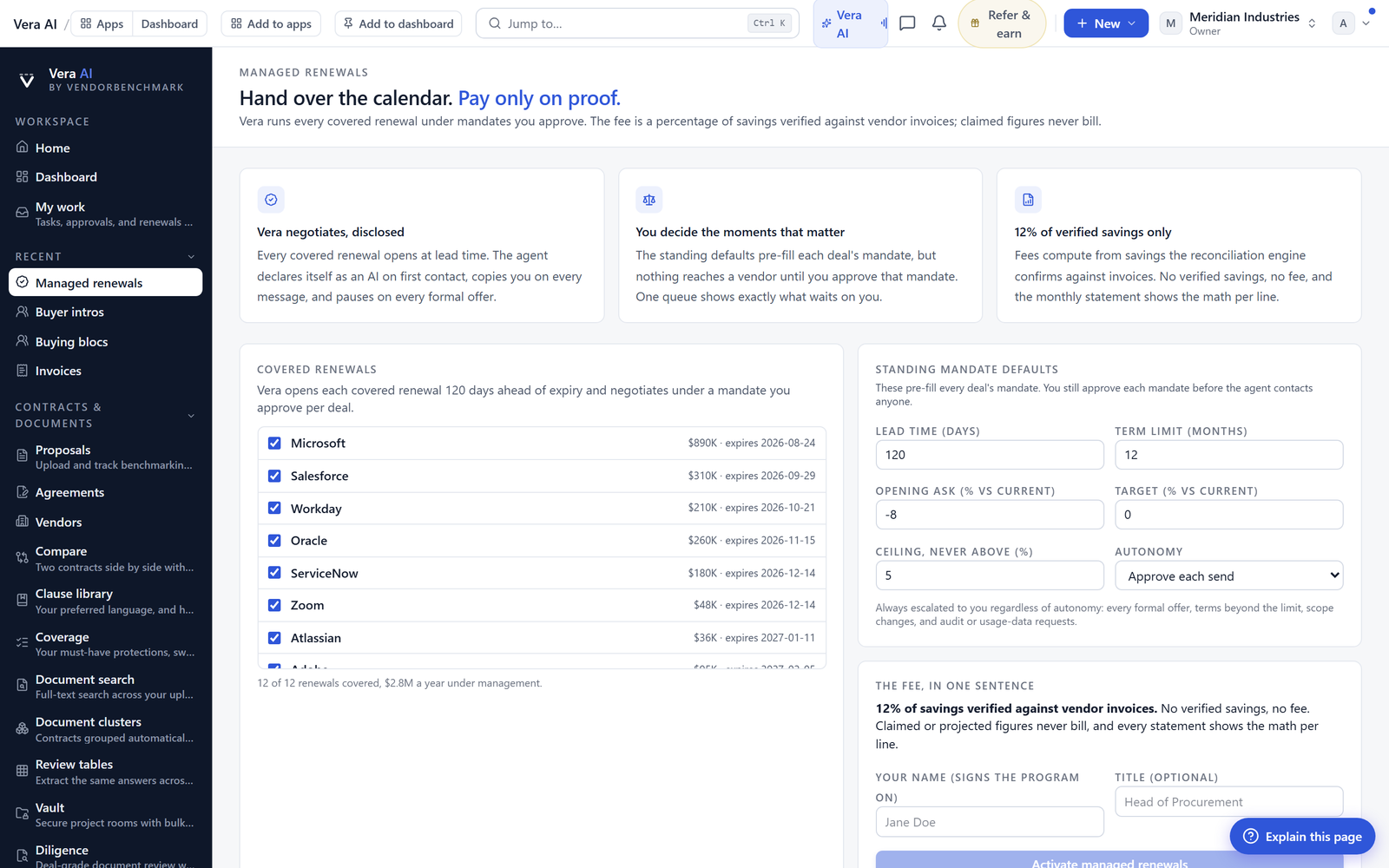
The window behaves like an application, so the verbs live in the File menu under the window's name. Start a renewal, Add the contract, Import, Export, Print, the sample book, and the keys all sit there. This is the same convention the contract agents adopted when they became Windows applications. If you want to see the shape before loading your own data, open the sample book from the File menu and the rooms populate with an example estate.
Export and Print are the two verbs a buyer reaches for under deadline. Export takes the brief out to whatever your steering group reads. Print produces the physical page some approval processes still require. Neither asks you to reconstruct the case in a second tool. You point at the agreement, you export, you are done.
Honest limits
The Renewal Agent reduces the cost of assembling and presenting a renewal book. It does not decide the outcome. The window shows you the heavy weeks, but staffing and sequencing are your calls. The case reads the plan, but a plan is only as good as the evidence and the posture behind it. If your contract records are incomplete, the book reads incomplete, and the agent will not invent the missing term. Add the contract first.
Two more honest points. The heavy weeks lens is only as accurate as the renewal dates you have loaded, so a vendor whose date is wrong in the record will land in the wrong week. And the approach lens frames posture, it does not negotiate. The actual negotiation still happens in the Negotiation Agent and in the room with the vendor. The Renewal Agent gets you to that room with the four facts in hand and the switch cost gone. Open it under the renewal desk window and load your book.
Want to be updated when major licensing and pricing changes land? One analyst brief a week: the price rises, metric changes and audit campaigns that move software costs. Work email only.
Morten brings two decades of enterprise and software procurement, with stints across Oracle, IBM, SAP, and Salesforce shaping how he reads a deal. He has led sourcing through hundreds of renewals, from mid market order forms to nine figure global agreements, and learned that the buyers who win are the ones who walk in knowing the market. He built VendorBenchmark to make that pattern recognition repeatable.


